
Applied intelligence. Shared capability.

FDE & DS
Excellence Programme.

Four sessions for Forward Deployed Engineers. Five for Deployment Strategists. Two complementary tracks that turn real customer work into stronger delivery teams.

Just exploring? Request the brochure without applying.

Explore the programme
FDE: 4 SESSIONS · DS: 5 SESSIONSBuilt around your team’s real engagements
01 / The programmeCapability building · Enterprise AI

Two roles.
One delivery team.

Develop the judgement to choose the right problem, and the engineering discipline to deliver it.

How the team learns

Work on your team’s real engagements, appropriately de-identified. Each session produces working artefacts to keep using: from discovery and scoping to shared playbooks and structured hiring.

04FDE sessions
05DS sessions
Real engagements.
Working artefacts.
Capability that stays.
Inside the programme

A problem worth solving.
A team that can build it.

Choose either track on its own, or develop both roles in parallel. The sessions are separate, so each group can focus on its own responsibilities.

Deployment Strategist

Owns the problem and its value. Chooses which problems are worth solving and proves what the outcome is worth, before a line of code is written.

Question / Value / Scope
Explore the programme tracks
The curriculum

Four for FDE.
Five for DS.

Each track stands on its own. Choose the FDE track, the DS track, or both. This is the current programme outline; examples and session emphasis are adapted to your team’s accounts, challenges and organisation.

FDE / 4 sessions · 2 hours each

Forward Deployed Engineer

For engineers who work directly with customers. Focused on judgement, customer dialogue and delivery responsibility, rather than coding instruction.

  1. The FDE role & design challenge

    Understand the role’s origins, economics and limits; distinguish it from engineering, consulting and presales. Decide when to configure, extend or invent, then rehearse a design under challenge from colleagues before presenting it to a customer.

    What you make Your team’s eight FDE behaviours, a design-note template and a quality-gate checklist.

  2. Customer dialogue

    Use a chain of “why” questions and the Five Whys to uncover the real need. Discover KPIs at three levels, design steering committees and learn when to change the level of a conversation or escalate internally. DS managers can also join this session.

    What you make A steering-committee design and an escalation rule.

  3. Judgement & escalation

    Know when to decide, consult or stop. Give engineers responsibility with a safety net, set scope guardrails and use an ontology to build a shared understanding of the customer’s business.

    What you make A decision matrix and a reporting format.

  4. Positioning

    Answer “we already have Copilot” in the customer’s language. Explain where your offering fits and why its value matters in the customer’s own work.

    What you make A shared positioning guide for the team.
DS / 5 sessions · 2 hours each

Deployment Strategist

For people who own customer outcomes, and their managers. Develop the ability to shape the work, connect it to product value and build the team around it.

  1. Foundations: the DS role

    Own the customer outcome and define boundaries with presales, customer success, sales, FDEs and systems integrators. Adapt the model to your organisation, using an interview exercise grounded in a real working day.

    What you make Role boundaries and a DS/FDE role definition.

  2. Product thinking

    Distinguish bespoke work, work to productise and standard capabilities. Connect field learning to product development, use the Three Client Rule and plan how each account can create reusable value.

    What you make A classification rule and a flywheel plan for each account.

  3. Inside the customer organisation

    Discover and scope the problem together, treating requirements definition as shared exploration. Agree what “done” means, map informal influence, work with champions and practise difficult conversations and escalation.

    What you make Scope and definition-of-done templates.

  4. Knowledge as an asset

    Turn meeting records, a case library and post-mortems into knowledge the whole team can find and use. Build habits that preserve decisions and make lessons from one engagement useful in the next.

    What you make A record template, case-library schema and post-mortem format.

  5. Hiring

    Hire for distinctive strengths while holding a consistent hiring bar. Design structured interviews that help the team recognise the capabilities the DS role needs.

    What you make A hiring bar and an interview structure.

How it works

Real work.
Lasting capability.

Work with appropriately de-identified examples from your own engagements. Each session ends with a working artefact and a dated commitment to take into the participant’s next manager one-to-one.

Timing
Two hours per session, usually weekly over five weeks. Four sessions for FDE; five for DS. The two tracks run separately and can be scheduled in parallel.
Format & group size
In-person workshops, typically for around 20 participants per track, with additional instructors and facilitators available for larger groups. Content is tailored to your team’s accounts, incidents and organisational structure.
Language
Choose Japanese delivery with Japanese-speaking instructors, or English delivery with live Japanese interpretation. Japanese slides and materials are provided, with group work and writing in Japanese.

What your team keeps

  • Bilingual pre-reads, handouts and worksheets.
  • Recap and commitment cards to carry learning into everyday work.
  • Typed-up working artefacts, supplied as drafts for your internal review and approval.
  • A bilingual session summary within 48 hours.

Tell us which roles you want to develop and the challenges your team is facing. We’ll shape the programme with you.

Declan Clowry

Programme lead & teaching team

Taught from experience.

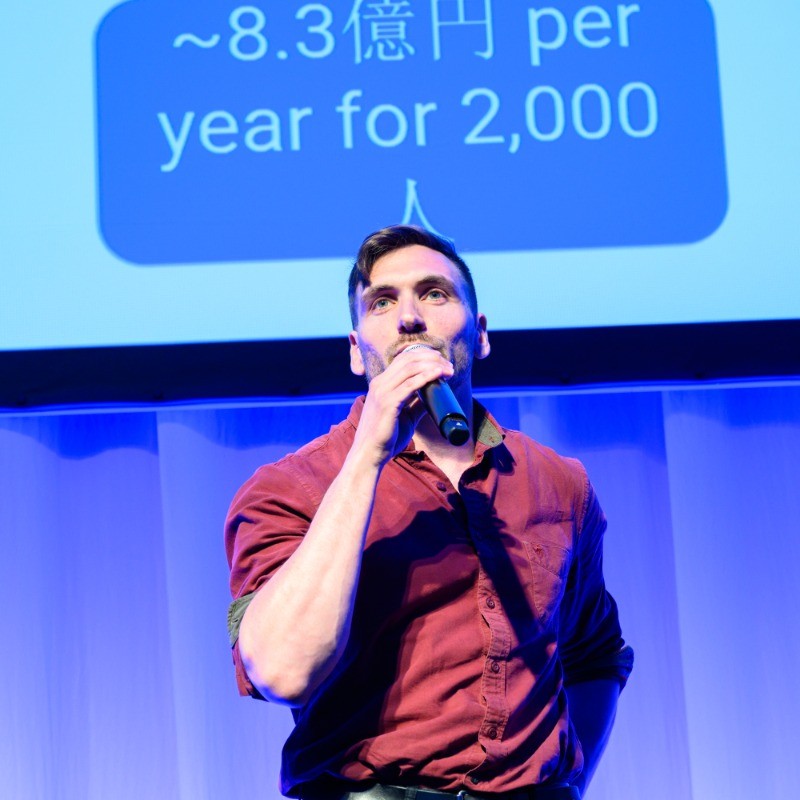
The programme was created and is led by Declan Clowry, Foundry Labs’ co-founder and CTO. Across six years at Palantir, he worked as a Deployment Strategist and progressed to Enterprise Lead, leading FDE and DS teams in the UK, Germany and Japan.

That experience—doing the roles, hiring for them and running the teams—informs how the programme approaches problem selection, software deployment and building a delivery team.

Cedric Wagrez, Foundry Labs’ co-founder and COO, co-facilitates alongside our wider facilitation team.

For larger groups, we bring in additional instructors, including professional educators and other former Palantir staff.

More about Declan

Take the next step

A brochure.
A conversation.

Get the programme details by email, or ask about fit, timing and pricing for your team. You don’t need to apply or have a complete brief.

contact@foundrylabs.co.jp

Prefer to email directly? Mention “FDE & DS” and whether you’d like the brochure or a conversation.

How can we help?

We’ll reply by email with the brochure. This is not a programme application.

We use these details to reply to your brochure request or programme enquiry. Read our privacy notice. Please leave out confidential client information.

This opens a draft in your email app. Nothing is sent until you send the email. If no app opens, email us directly at the address shown here.