
Foundry Labs / From the community
AI for Energy and Carbon: Measure the Physical Outcome
In this article
AI applied to energy and carbon has to answer a physical question: what changed in the world, and how do we know? A prediction, a control recommendation, and a monitoring report can each be useful, but they need different evidence before a business can rely on them.
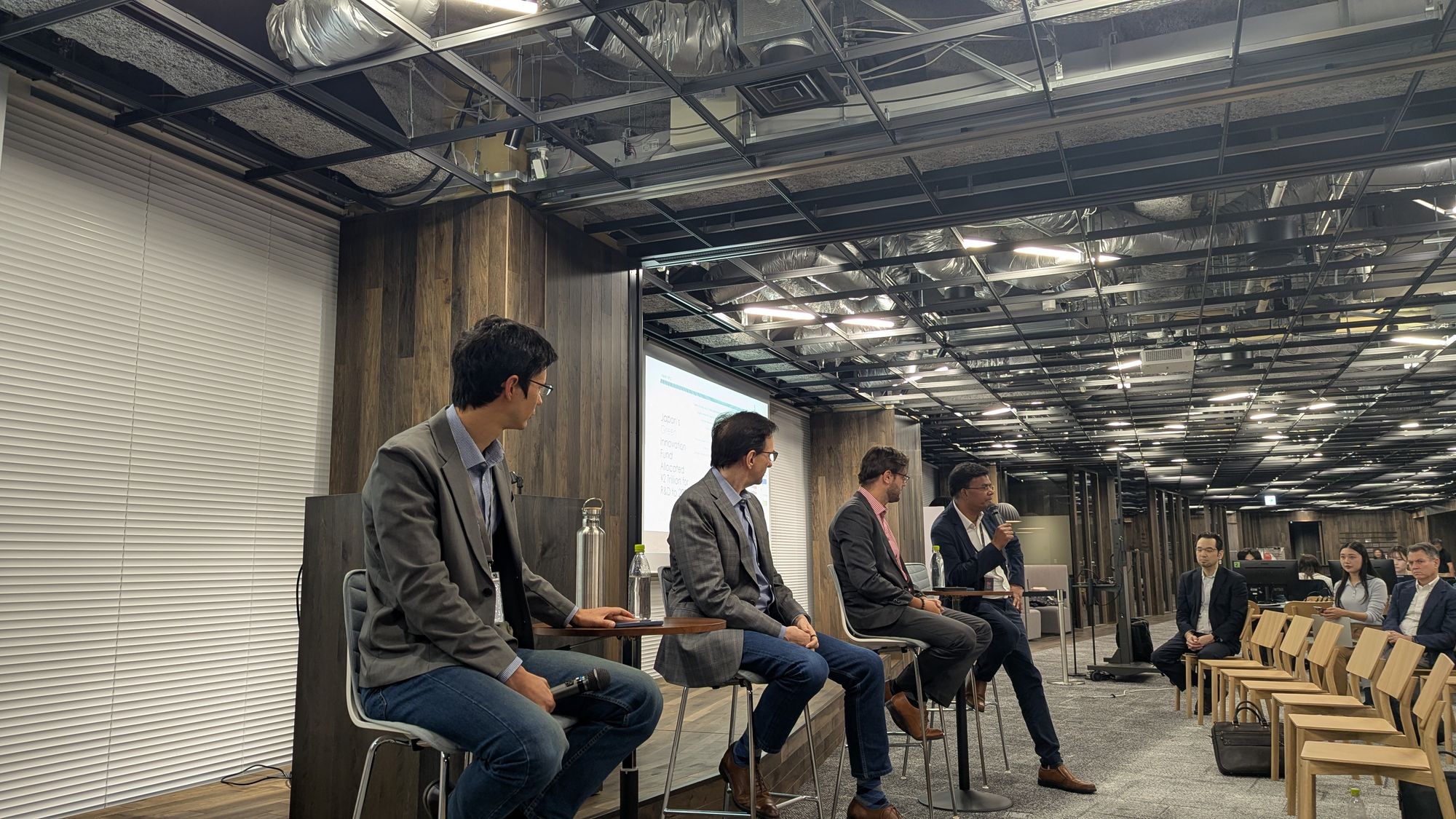
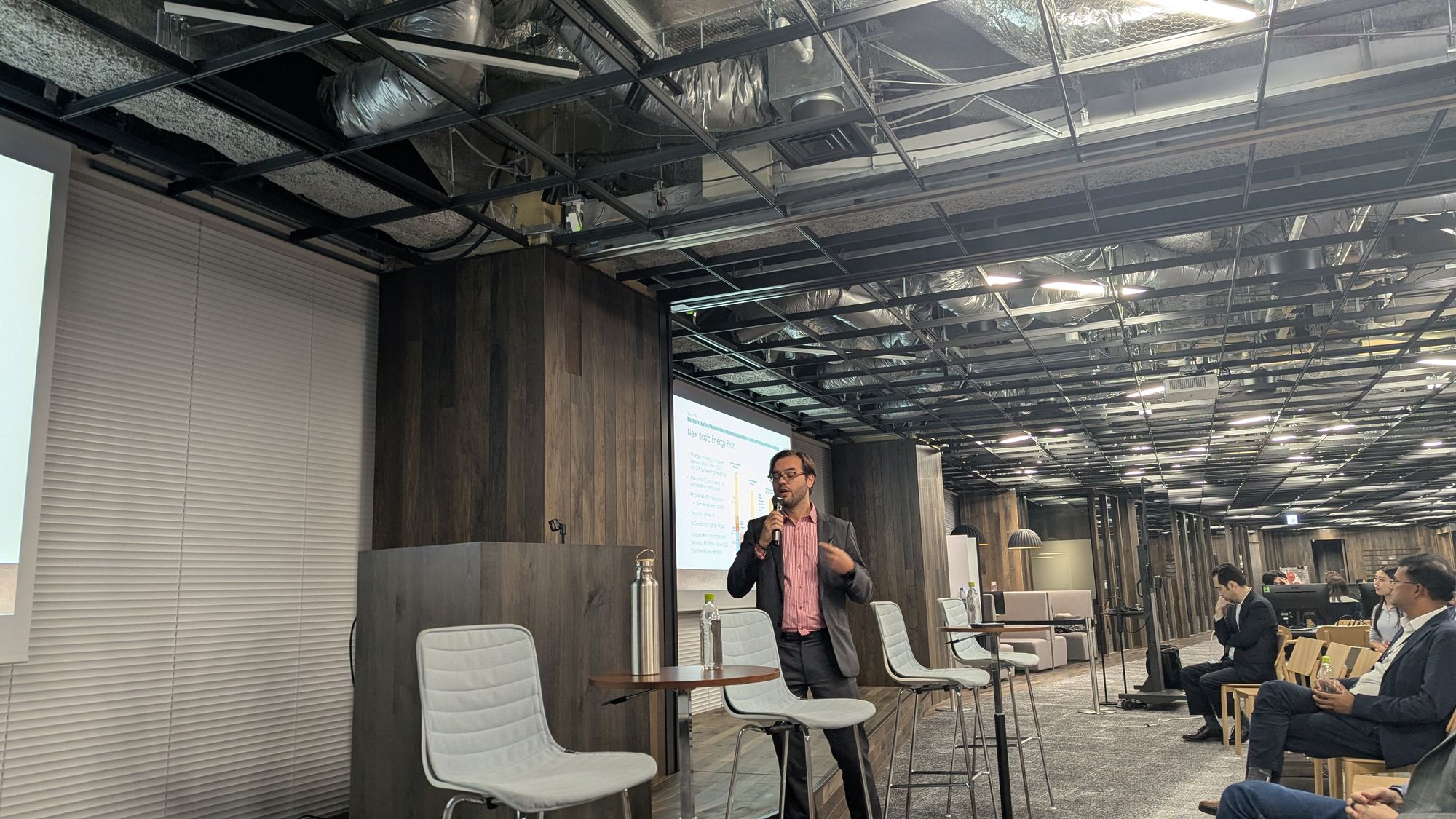
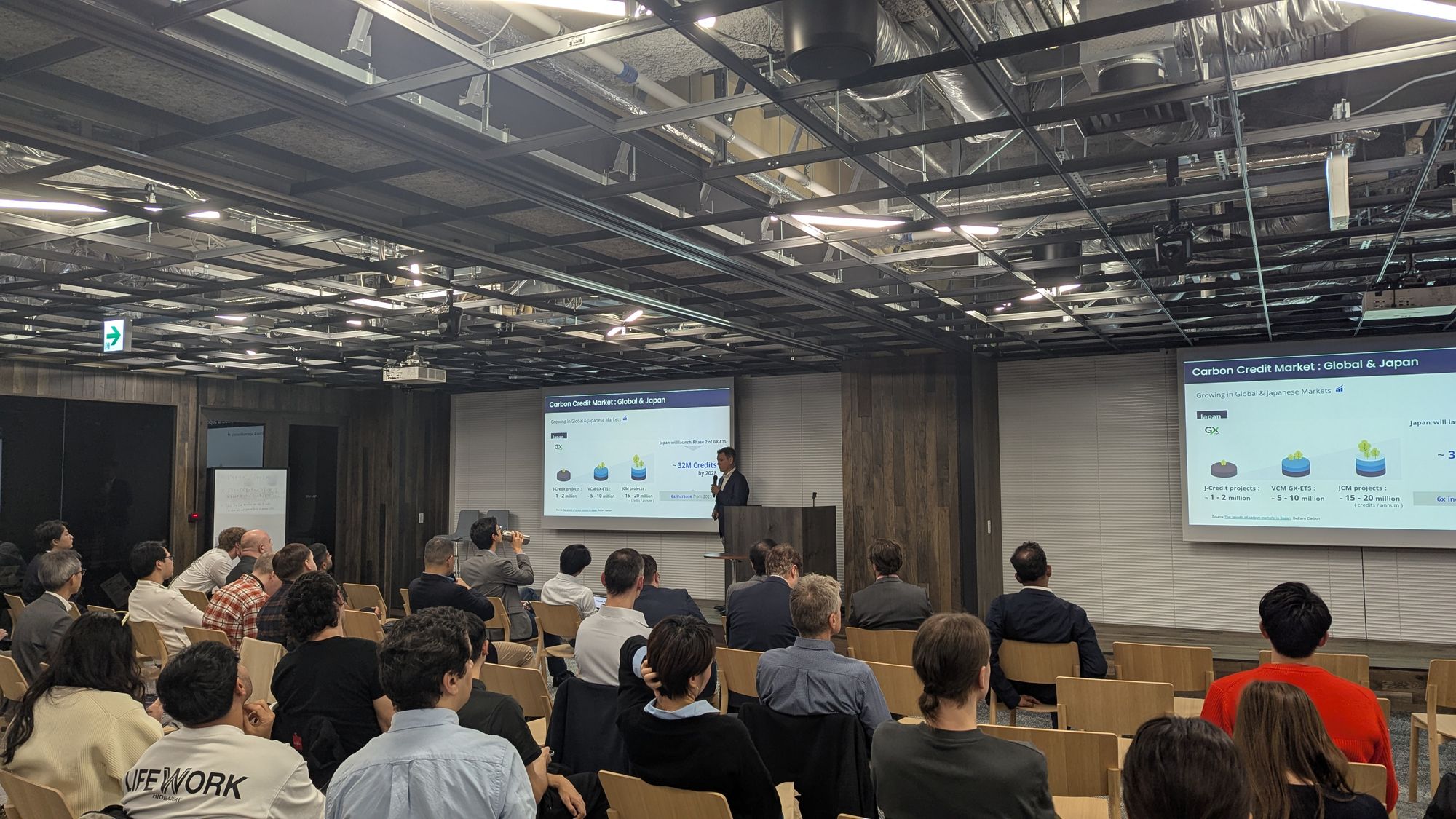
Energy x AI, held on 29 October 2025 and co-hosted by Lifetime Ventures, Tokyo AI, Scrum Ventures, and Investor for Climate, combined a panel with startup presentations. Two of those presentations offer complementary perspectives: adapting industrial systems and checking environmental estimates against observations.
An adaptive controller still needs an operating boundary
Alex Kunin, Co-founder and COO of KanjuTech, presents industrial cooling as a setting in which operating conditions change and static models can become less useful. His proposed approach uses adaptive learning at the edge, close to the machine.
The interesting engineering question is what adaptation is allowed to change. A system can learn from new conditions, but the surrounding operation still has limits, responsibilities, and a definition of acceptable performance. Learning is not a substitute for those constraints.
For example, a controller that reduces energy use by allowing a process to miss its required temperature has optimized the wrong objective. The useful target is the physical result within the conditions the process must satisfy. That requires measurements from the actual operation and a way to detect when the model’s assumptions no longer fit.
Remote sensing needs a connection to the ground
Bryan Atwood, CEO and Co-founder of DAI Labs, presents CanopyScope through the combination of satellite imagery, AI, and ground information for forest and carbon monitoring. His talk illustrates the role of field calibration alongside remote estimates.
That connection matters because a model output is an estimate produced from a particular observation process. A map can look precise while still depending on the quality, timing, and coverage of its inputs. Local measurements provide a way to examine the relationship between what the model infers and what exists at the site.
This is especially relevant when the output enters planning or reporting. The user needs to know the area, period, and method represented, and which parts remain uncertain. The ability to generate a polished map does not independently establish the validity of a carbon-credit claim.
Control and reporting have different failure modes
The two presentations point toward distinct deployment problems. A control system changes a physical process and must operate within its limits. A monitoring system estimates and communicates a state of the world, with a need for traceability and appropriate interpretation.
They share a dependence on measurement, but the consequences of an error differ. A control error can immediately affect the process. An estimation error may travel into a report and influence a later decision. A team should define where each result goes and who is responsible for accepting it.
This helps keep an AI project’s claims proportionate. A promising prototype can justify a pilot. It does not by itself establish a repeatable energy saving, a financial payback period, or a verified environmental outcome.
Foundry’s perspective: design the evidence alongside the optimization
Consider an illustrative cooling-system pilot in a manufacturing facility. Before comparing an AI recommendation with existing practice, the team needs a baseline that includes relevant operating conditions. Production load, ambient conditions, equipment state, and the required process outcome can all affect the interpretation of energy use.
We would begin with an observation phase in which the system makes recommendations without directly changing controls. Operators can examine whether those recommendations fit the process and whether the available measurements are sufficient to judge them. The controls team defines the operating limits and the conditions for any later, bounded actuation.
When the trial progresses, each intervention should be linked to the conditions, approved action, and measured outcome. An apparent improvement that coincides with reduced production should not automatically be credited to the model. A result that cannot be reproduced under comparable conditions needs further investigation.
For a monitoring project, the parallel requirement is a traceable chain from input imagery and field observations to an estimate and its report. A changed model or calibration method should create an identifiable revision, so old and new outputs are not compared as though the method were unchanged.
The business case then rests on evidence the operating team can inspect. It can distinguish a useful change from a measurement artifact and decide whether to expand the deployment. For Foundry Labs’ edge AI and computer-vision work, that is the engineering opportunity: connect intelligent recommendations to the physical measurements and operating responsibilities that make them trustworthy.
Sources and further reading
This article draws on the Energy x AI programme and the talks identified above. Tokyo AI (TAI) connects researchers, engineers, and industry; explore Foundry Labs’ community work for more context.
Talk materials from Alex Kunin and Bryan Atwood are available upon request. Please use our contact form and include the event title and speaker name.
Featured speaker profiles
Alex Kunin. Co-founder and COO of KanjuTech. His talk examines adaptive learning for industrial energy systems. LinkedIn.
Bryan Atwood. Co-founder and CEO of DAI Labs, developing satellite-based environmental monitoring. LinkedIn.
All articles