
Foundry Labs / From the community
AI for Biology: Connect Data, Hypotheses, and Validation
In this article
Biology gives AI more than one type of evidence: sequences, measurements, images, published knowledge and experiments. At Tokyo AI's Bio x AI session, talks on scientific discovery and plant biotechnology showed why the useful output is not simply a prediction. A research team needs to trace a hypothesis back to data and then decide how to test it.
Keep the chain of evidence visible
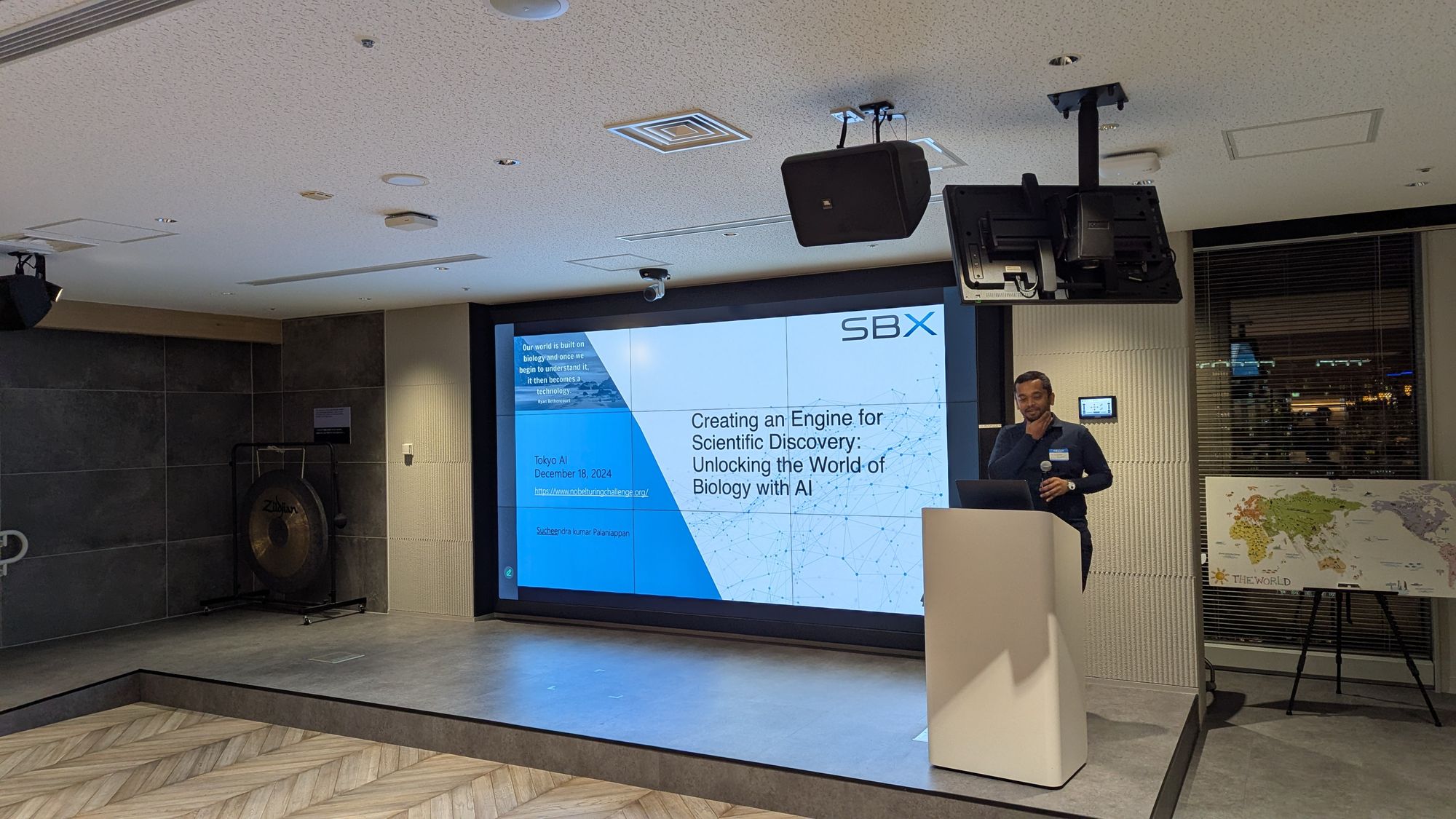
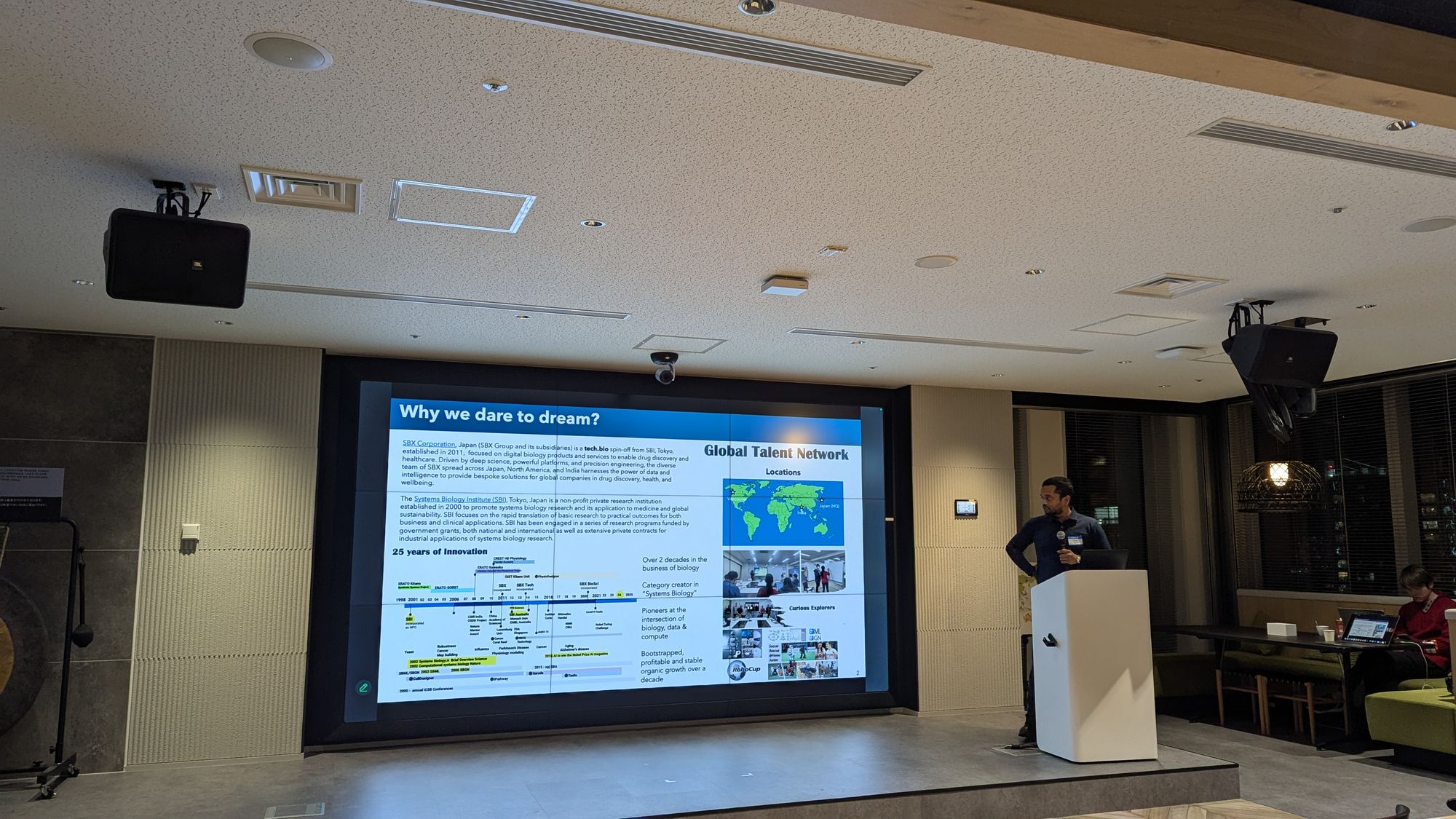
Sucheendra Kumar Palaniappan presented an ambition to build an engine for scientific discovery in biology. That requires more than putting heterogeneous files into one model. The same biological entity may be named differently across datasets; a measurement may depend on a particular assay; a paper's claim may describe a different organism or condition. A useful system records these differences so a researcher can inspect what supports a proposed connection.
Paula Elbl's talk on plant systems and chemical diversity offers a concrete setting. Searching the plant kingdom for useful compounds involves biological variation, sampling and laboratory work. AI may help prioritize possibilities, but the next experiment remains part of the answer. A ranking without information about the source material, its preparation and the evidence for the prediction is hard to act on.
Turn a hypothesis into a testable plan
Imagine a team considering whether a plant-derived compound merits further study. An AI-assisted workflow could connect prior observations, chemical measurements and relevant literature, then propose which sample or assay to examine next. The researcher should see where each item came from, what is missing and whether the proposed test can actually distinguish competing explanations. This is an illustrative workflow, not a result reported at the event.
For a production research platform, the handoff matters: data ingestion, hypothesis review, experiment design and result capture must share identifiers and provenance. When an experiment contradicts a prediction, the system should retain that negative evidence. The goal is a faster, more inspectable cycle of learning, not a claim that AI can replace biological validation.
Tokyo AI is a community of builders, researchers and business leaders in Japan, run by Foundry Labs. See the event page.
Materials from the talks by Sucheendra Kumar Palaniappan and Paula Elbl are available upon request. Please use our contact form and include the event title and speaker name.
Speakers
- Sucheendra Kumar Palaniappan, scientific AI and systems biology practitioner.
- Paula Elbl, co-founder and CSO, Cyanotype Bio.