
Foundry Labs / From the community
AI in Finance: From Forecasts to Decisions Under Uncertainty
In this article
At Tokyo AI's October 2026 AI x Finance gathering, three talks approached a common problem from different directions: how does a model output become a decision an institution can stand behind? A forecast alone does not answer that question. The workflow around it must define what the signal means, when to trust it and who can act.
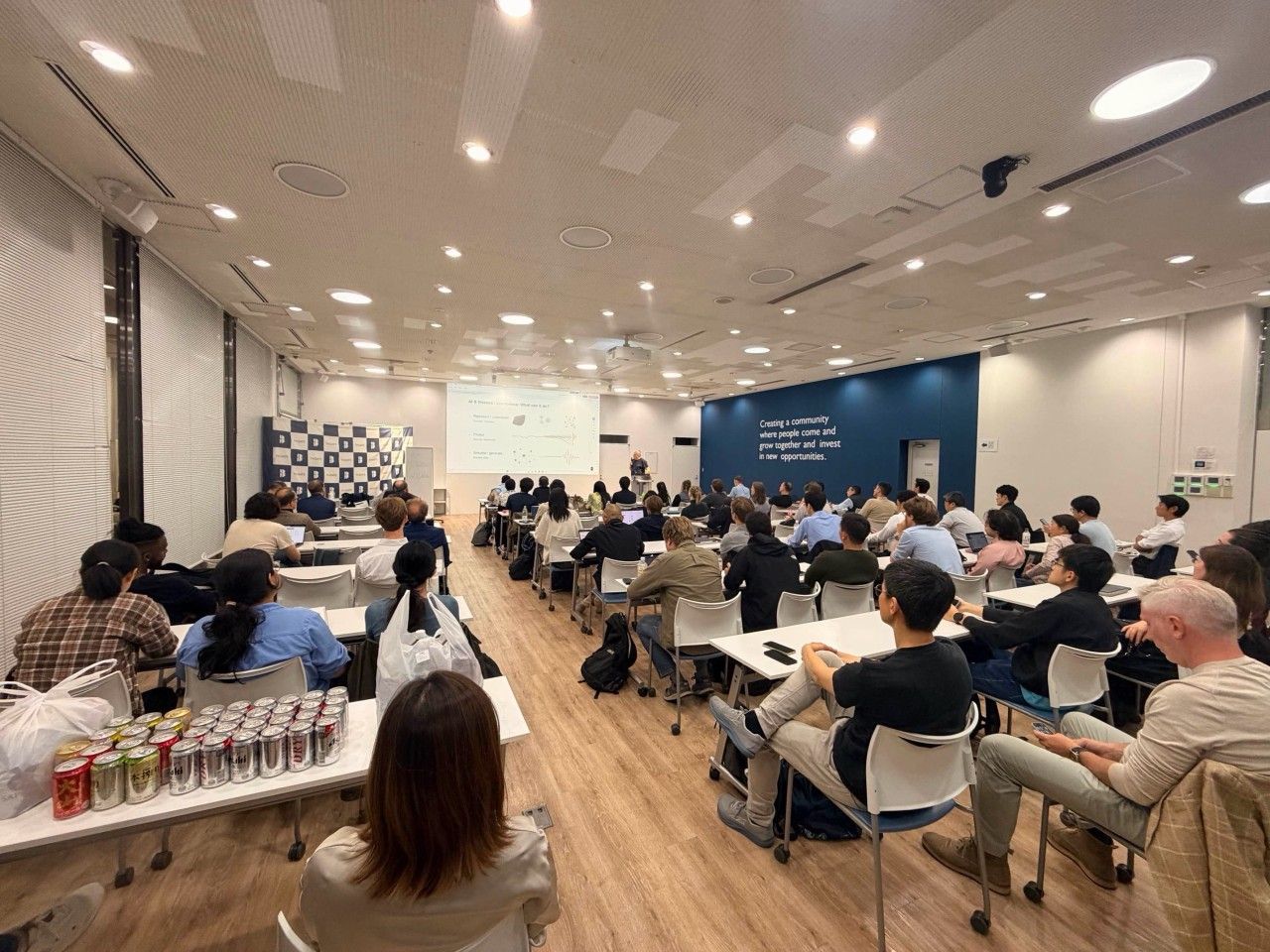
Put the model inside the institution
Amin Debabeche's talk surveyed AI use across trading, risk, compliance, research and client operations. These domains share data and models, but their controls differ. A research summary can be revised before anyone uses it; a risk alert may require an immediate review; an action in a live market needs a separate authorization path. The useful starting point is a specific decision and its owner, rather than a generic promise to automate finance.
Matei P. Mihalca offered a wider frame. His talk distinguished systems that model relationships and mechanisms from AI that performs individual tasks without an explicit model of the whole. That distinction matters when a team wants to interpret a signal. A fluent explanation of market news and a model of how a change propagates through an institution answer different questions. Both need validation against the decision they support.
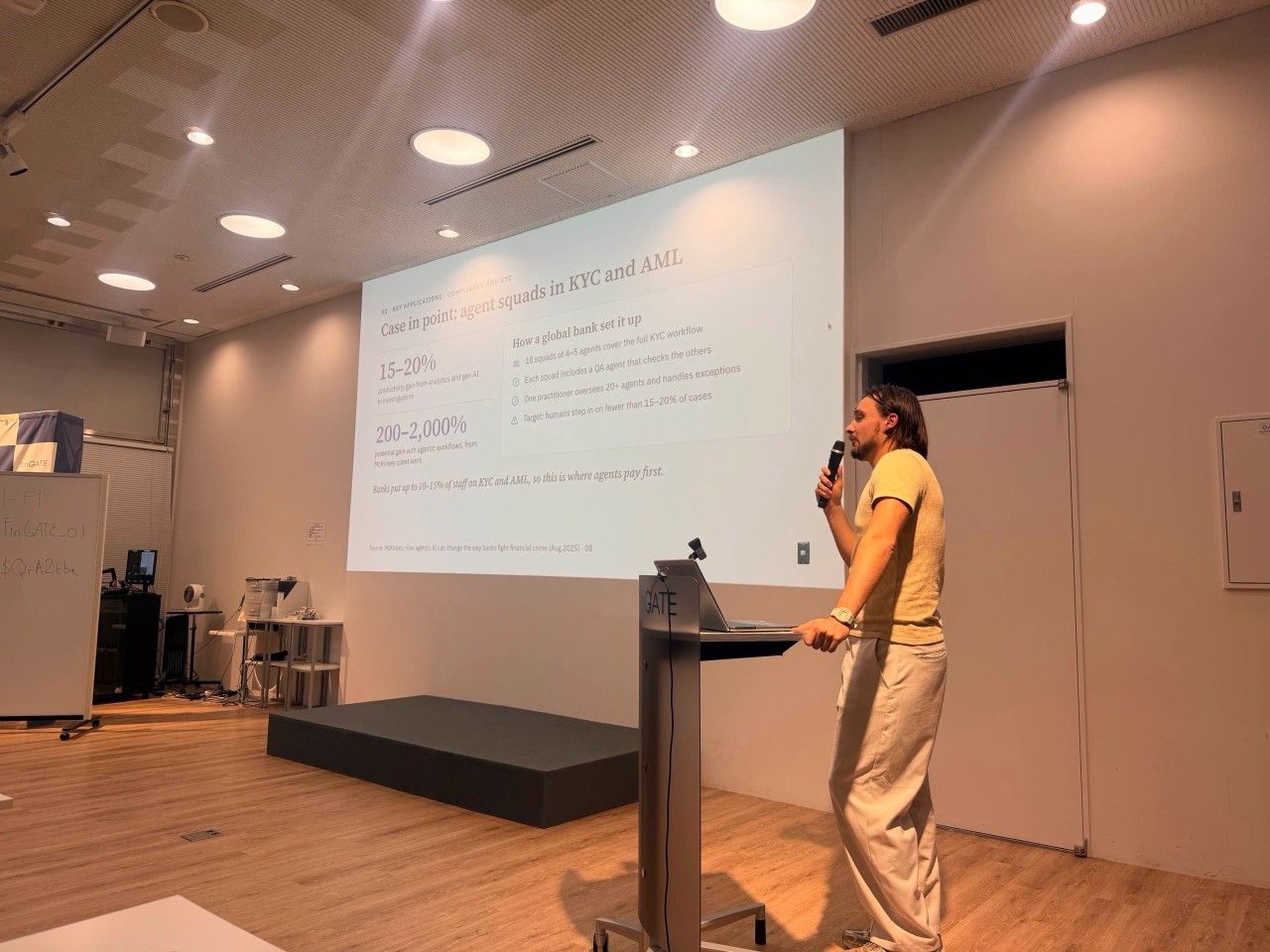
Decide when a forecast deserves attention
Albi Isufaj's work separates forecasting from a second stage that estimates whether a directional prediction is reliable enough to use. The distinction is valuable even without accepting any particular backtest result: a model can produce a forecast on every input while its evidence for acting varies sharply. A production system should expose that uncertainty, the conditions under which the model was tested and the cases it declines to judge.
For example, a finance operations team might use an AI signal to prioritize review of unusual exposures. Before the pilot becomes routine, it would define the source data, the threshold for human review, who can override the signal and how a mistaken alert is recorded. It would also measure missed cases, review workload and behavior when market conditions change. This is an illustrative workflow, not a report of a deployment at the event.
The three perspectives lead to one practical test: can the team explain the path from evidence to forecast to authorized decision, and can it inspect that path later? That is where enterprise adoption becomes more than a demonstration.
Tokyo AI is a community of builders, researchers and business leaders in Japan, run by Foundry Labs. See the event page.
Materials from the speakers’ talks are available upon request. Please use our contact form and include the event title and speaker name.
Speakers
- Amin Debabeche, Forward Deployed Engineer, UBS Tokyo.
- Matei P. Mihalca, advisor to Sakana AI and affiliated researcher at Centro Ricerche Enrico Fermi.
- Albi Isufaj, PhD candidate at SOKENDAI and the National Institute of Informatics.