
Foundry Labs / From the community
AI Research Partnerships in Japan: Design the Shared Problem First
In this article
A research partnership becomes useful when the parties can name the problem they will solve together. Tokyo AI's EU-Japan AI Bridge event brought researchers and industry participants into the same room. The talks offered several routes to collaboration, but the practical question for a company is what can be shared, tested and owned after the introduction.
Begin with a common problem
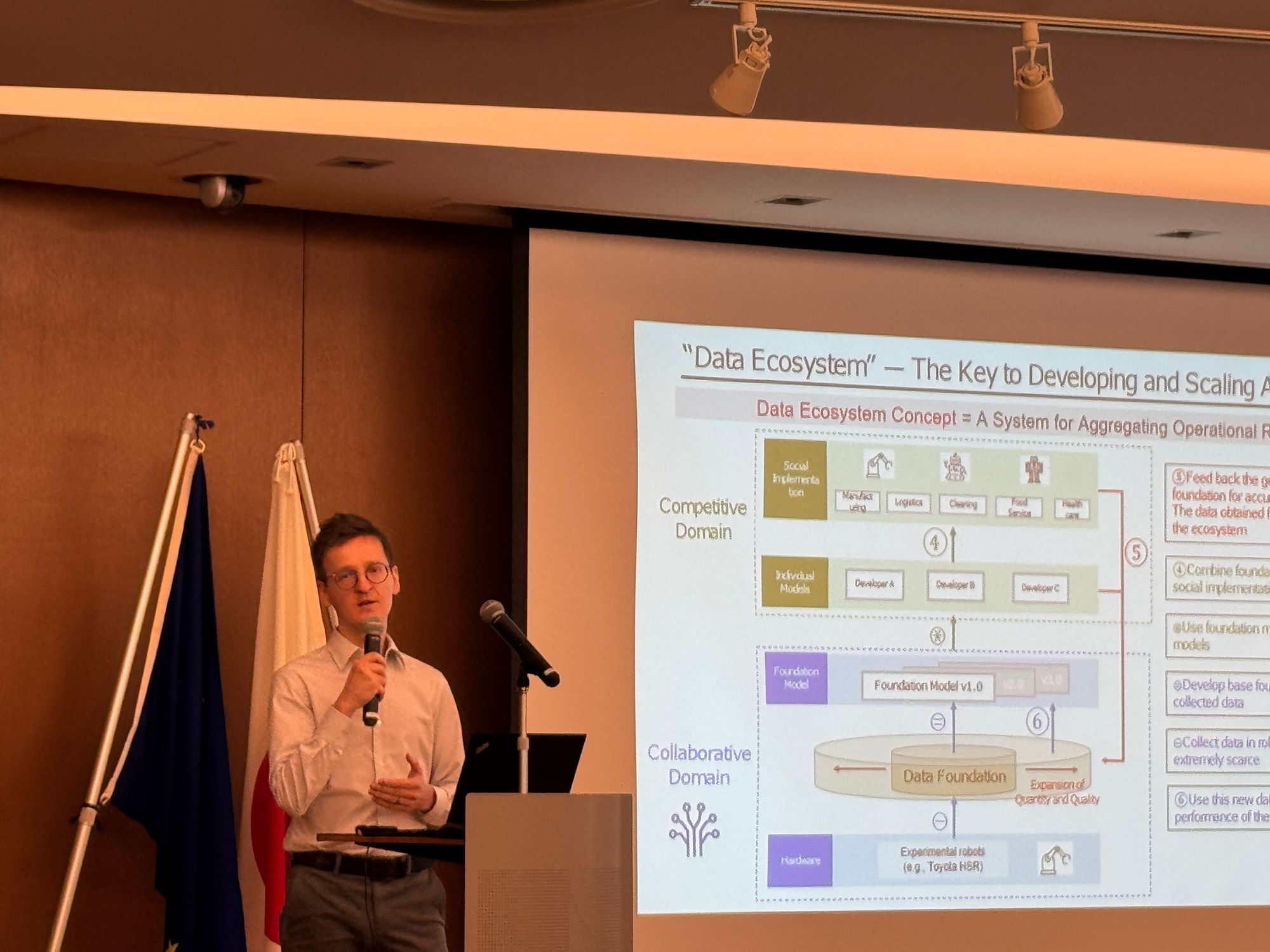
Judit Erika Magyar's talk described academia-industry collaboration through the Marie Skłodowska-Curie Actions. The programme can create a framework for people and institutions to work together; it does not define a company's research question for them. A strong first discussion identifies the phenomenon to study, the data or facilities each party can provide and the result that would change a decision. Funding or a memorandum cannot substitute for that shared problem.
Yukio Ohsawa's work on chance discovery adds another angle. A small signal may matter because it indicates an emerging change, but its significance has to be explained to people making a decision. A collaboration can help when researchers bring methods for exploring such signals and an industry team brings the context to judge which ones are meaningful. The interpretation should remain traceable to the underlying observations.
Design the data boundary early
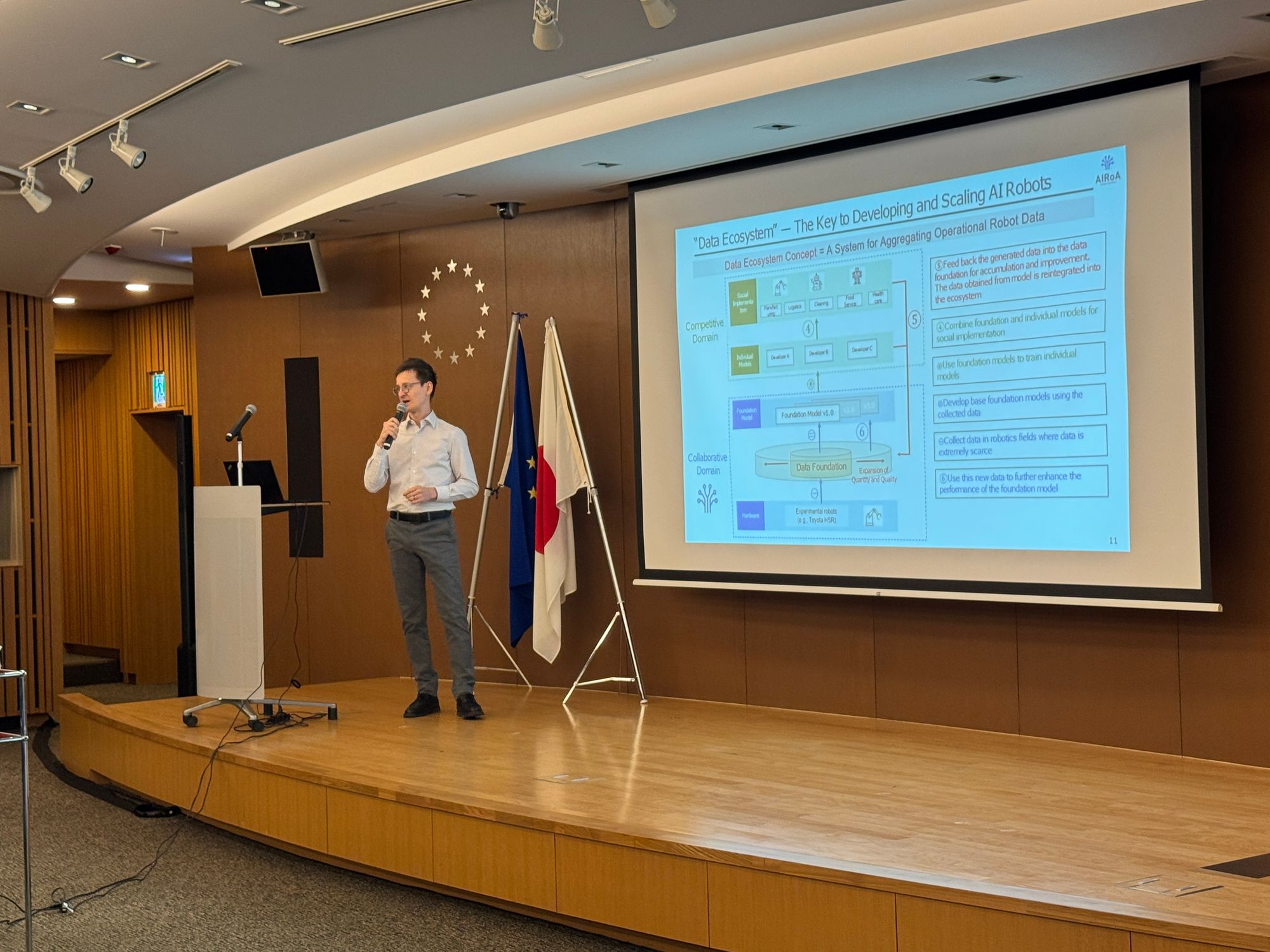
Mei Kobayashi presented federated learning as a way for multiple parties to train collaboratively without exchanging raw datasets. That may help when organizations cannot pool records, but it does not remove questions about data quality, access, model updates or what information can still be inferred from outputs. The partners need to agree on evaluation cases and governance before assuming a technical architecture solves a trust problem.
Consider an illustrative consortium studying equipment faults across several companies. Each partner could define permitted data, a common failure label and an evaluation protocol, while keeping raw logs local. Researchers could test whether a shared model improves detection; operators would review false alarms and decide whether the result belongs in a maintenance workflow. That is a concrete route from introduction to experiment, with responsibilities and limits visible from the start. No outcome from such a consortium was reported at the event.
Tokyo AI is a community of builders, researchers and business leaders in Japan, run by Foundry Labs. See the event page.
Materials from the talks by Judit Erika Magyar, Yukio Ohsawa and Mei Kobayashi are available upon request. Please use our contact form and include the event title and speaker name.
Speakers
- Judit Erika Magyar, Regional Liaison Officer, MSCA-GLOPOL.
- Yukio Ohsawa, Professor, the University of Tokyo.
- Mei Kobayashi, AI researcher, EAGLYS.