
Foundry Labs / From the community
Japanese Speech AI: Design for Meaning, Timing, and Correction
In this article
A speech system can produce a readable transcript and still fail the workflow around it. It may miss a crucial product name, deliver the final text too late, or make it difficult for a person to correct a misunderstanding before it becomes a business record.
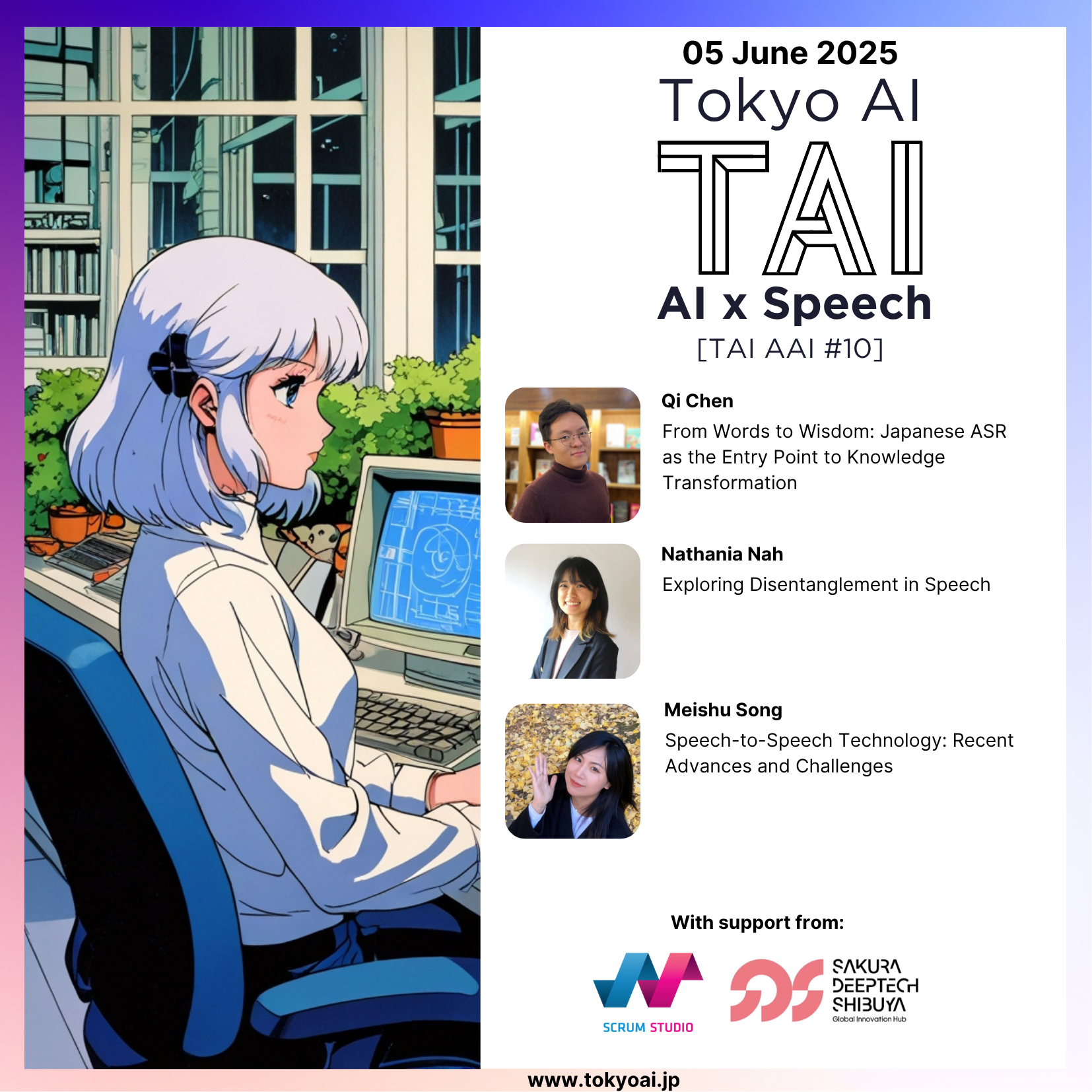
Tokyo AI’s AI x Speech, held on 5 June 2025, connected Japanese speech recognition, speech representation learning, and speech-to-speech interaction. The talks suggest evaluating speech AI through the meaning and timing of the work, as well as recognition accuracy.
Define the speaking environment before choosing the model
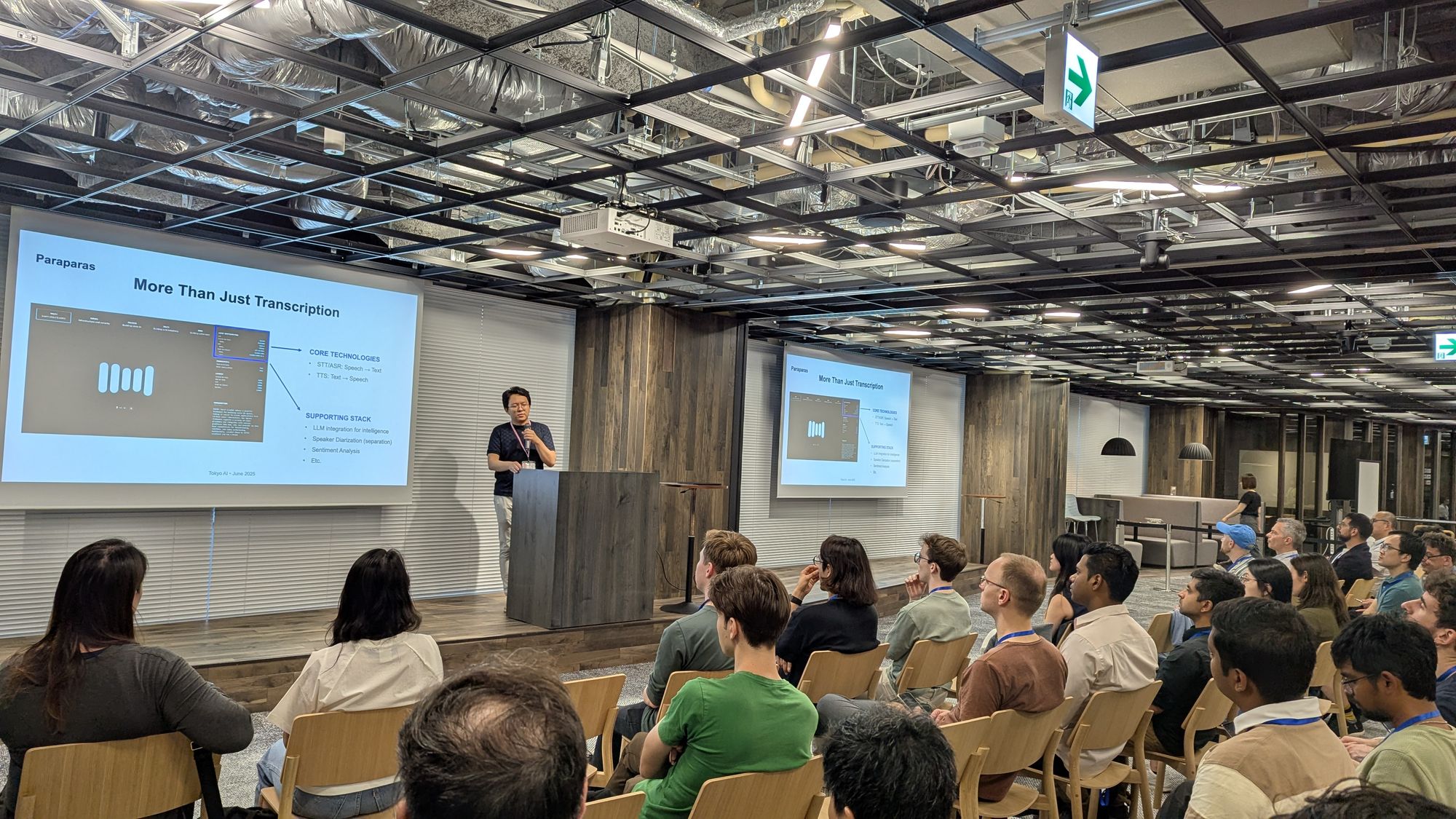
Qi Chen, CEO and Co-founder of Paraparas, frames speech-system choices around language profile, processing mode, and environment. These dimensions distinguish a quiet recording processed later from a live conversation with accents, background noise, or switching between languages.
His discussion also separates the arrival of the first transcription result from the arrival of the final transcript. That difference matters in a live interface. A person can begin reading a provisional result quickly, but a downstream process may need to wait for a stable interpretation before acting on it.
For a Japanese enterprise workflow, evaluation should include the names, abbreviations, and speaking conditions that occur in that workflow. A clean general-purpose test does not establish whether the system can preserve a customer’s intended date or an internal product code.
Not every recognition error has the same consequence
Chen’s treatment of word error rate highlights a limitation of aggregate transcription accuracy: errors differ in their impact. A small grammatical defect and an incorrect quantity may contribute to a metric without carrying the same business cost.
This does not make a standard recognition metric useless. It means it needs a companion evaluation tied to the task. Can the system recover the requested item, deadline, and responsible person? Does uncertainty remain visible, or does a fluent summary conceal it?
The correction path deserves attention as well. If fixing one misunderstood term requires replaying a long recording and rewriting several derived notes, the operational burden can remain high even as average recognition improves. The interface should let a person repair the source interpretation and understand what downstream information changed.
Speech contains several kinds of information
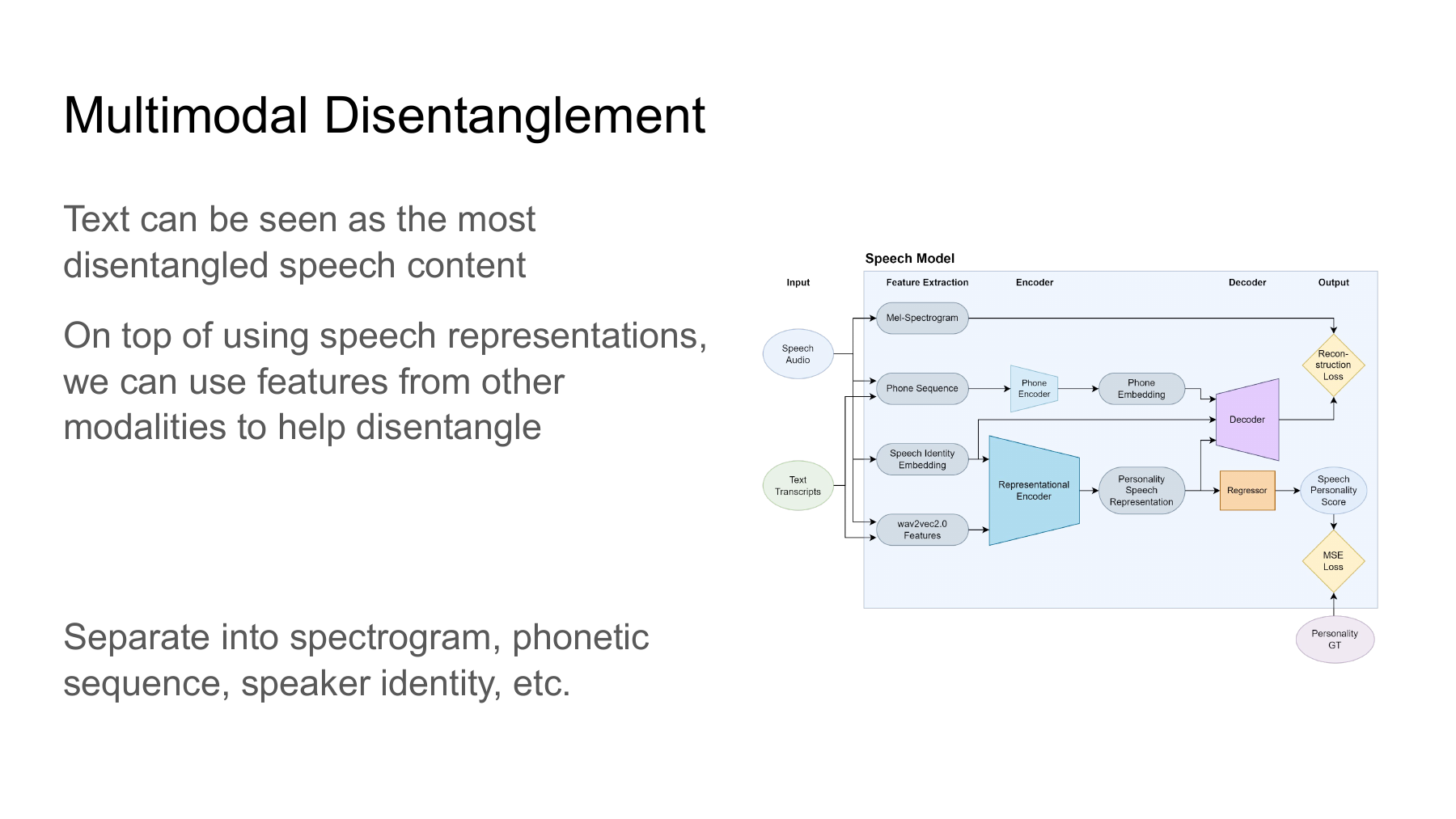
Nathania Nah’s talk on disentanglement asks how representations can separate factors such as content, speaker identity, and emotion. The technical motivation is to understand which features a model uses and reduce sensitivity to variation that is irrelevant to a particular task.
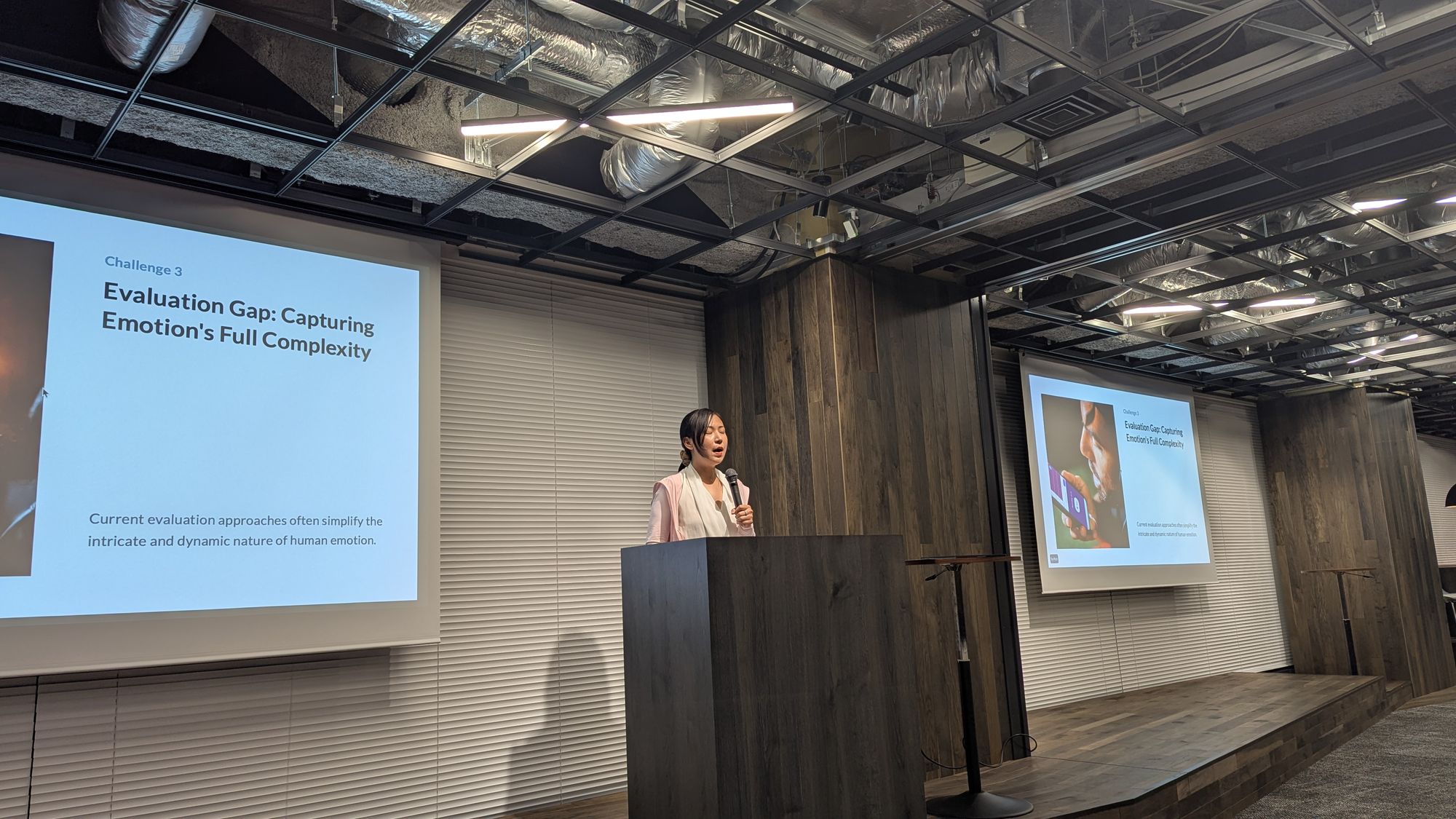
Meishu Song’s discussion of speech-to-speech systems brings out a related tension: optimizing for verbal content does not automatically preserve emotional expression. She also identifies difficulty in controlling these factors independently and evaluating emotion in a sufficiently rich way.
For a product team, the implication is to specify what information should survive the transformation. A meeting action item may need accurate content and attribution. A conversational character may also need timing and expression. Neither use case justifies assuming that a model can reliably infer a person’s internal state from their voice.
Foundry’s perspective: connect a conversation to a correctable record
Consider an illustrative assistant that turns a Japanese service call into a draft case record. The PoC may produce a polished summary. The production design needs to preserve the link between a claim in that summary and the relevant part of the conversation.
We would begin with the fields the service team actually uses: the requested action, named item, date, and any unresolved question. The system could present uncertain terms for confirmation before saving the record. Audio and text would follow an explicit access and retention policy, with the minimum material needed for review.
A correction should have a defined effect. If an operator changes the requested delivery date, the case record and any proposed follow-up should reflect that correction. The earlier interpretation should not survive unnoticed in a separate summary or task list. This requires data and workflow design around the speech model.
The initial rollout could prepare drafts for a bounded call type while operators retain responsibility for confirmation. Useful measures include errors in business-critical fields, correction time, finalization delay, and the frequency of unresolved cases. A lower average error rate would be encouraging, but a reduction in costly corrections would better explain the value to the team.
That is the connection to Foundry Labs’ multimodal systems and interface work. Speech becomes useful when it helps people create reliable, actionable knowledge and gives them a practical way to correct it.
Sources and further reading
This article draws on the TAI AAI #10 - AI x Speech programme and the talks identified above. Tokyo AI (TAI) connects researchers, engineers, and industry; explore Foundry Labs’ community work for more context.
Talk materials from Qi Chen, Nathania Nah, and Meishu Song are available upon request. Please use our contact form and include the event title and speaker name.
Speaker profiles
Qi Chen. CEO and Co-founder of Paraparas, with a background in cognitive science. LinkedIn.
Nathania Nah. PhD student at the Institute of Science Tokyo, researching speech representations. LinkedIn.
Meishu Song. Researcher at the University of Tokyo, working on affective computing and speech. LinkedIn.
All articles