
Foundry Labs / From the community
AI for Brand Work: Build the Workflow Around Creative Judgment
In this article
Generating a plausible brand asset is becoming easier. Deciding whether it belongs to the brand, works for its audience, and can be maintained by the team remains a demanding piece of work. An effective AI workflow needs to preserve that judgment while reducing the effort around it.
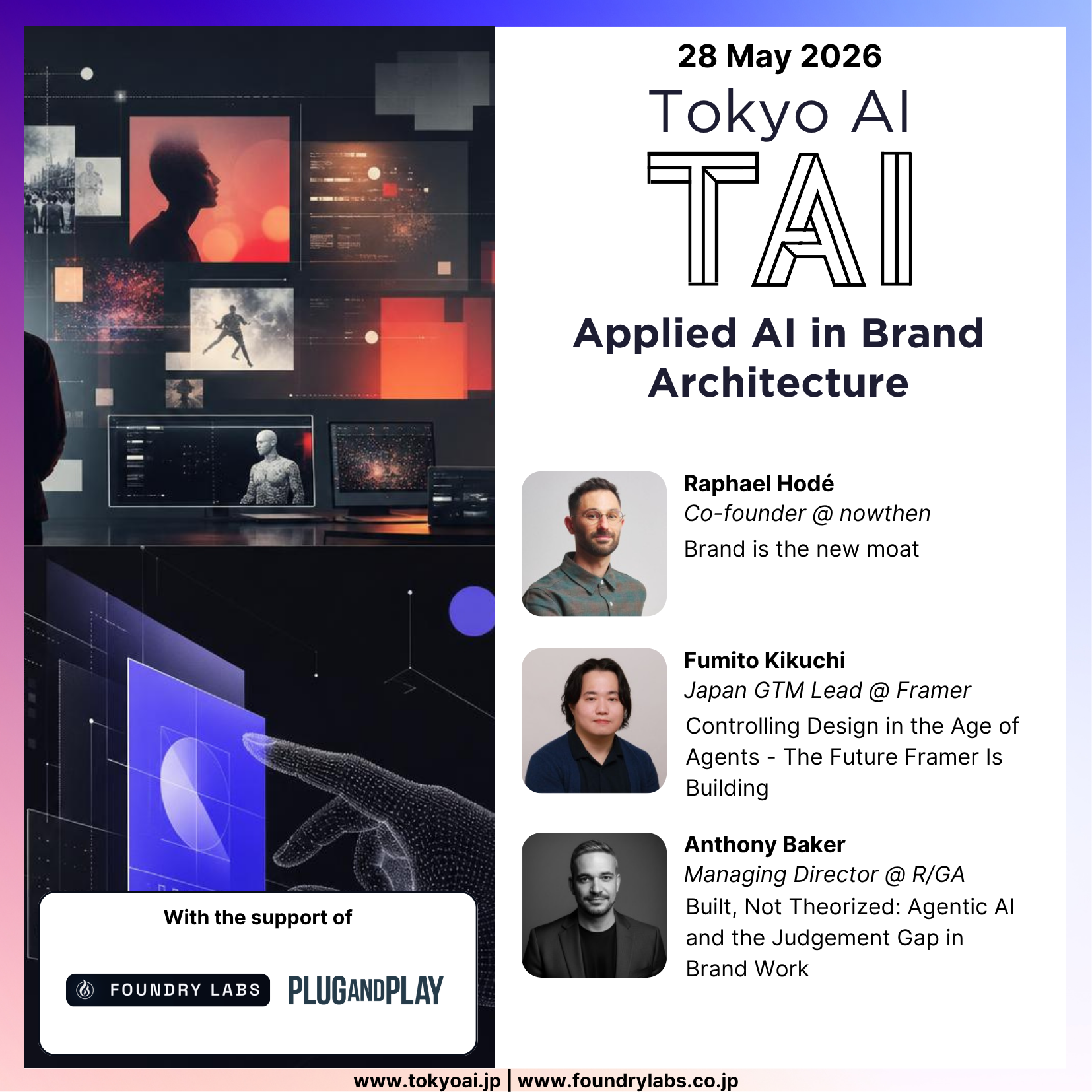
Tokyo AI’s Applied AI in Brand Architecture on 28 May 2026 brought together Raphael Hodé of nowthen, Fumito Kikuchi of Framer, and Anthony Baker of R/GA. Their topics connect differentiation, design control, and the practical ability to build useful AI tools.
Brand intent has to survive the workflow
Raphael Hodé’s talk frames brand as a source of differentiation when creating a product becomes easier. For a delivery team, that premise raises a practical question: how does the intended character of the brand survive the steps between a brief and a published experience?
Some requirements can be expressed directly, such as approved colors, typography, or a product name. Others depend on context: whether an image is culturally appropriate, whether a line of copy makes an unsupported promise, or whether the work feels recognizable without a logo.
A workflow that records only the easily measurable rules may pass mechanical checks while losing the intention behind them. The brief and the review criteria need to travel with the work, so generation is connected to a reason for choosing one outcome over another.
The first draft is only one stage of design
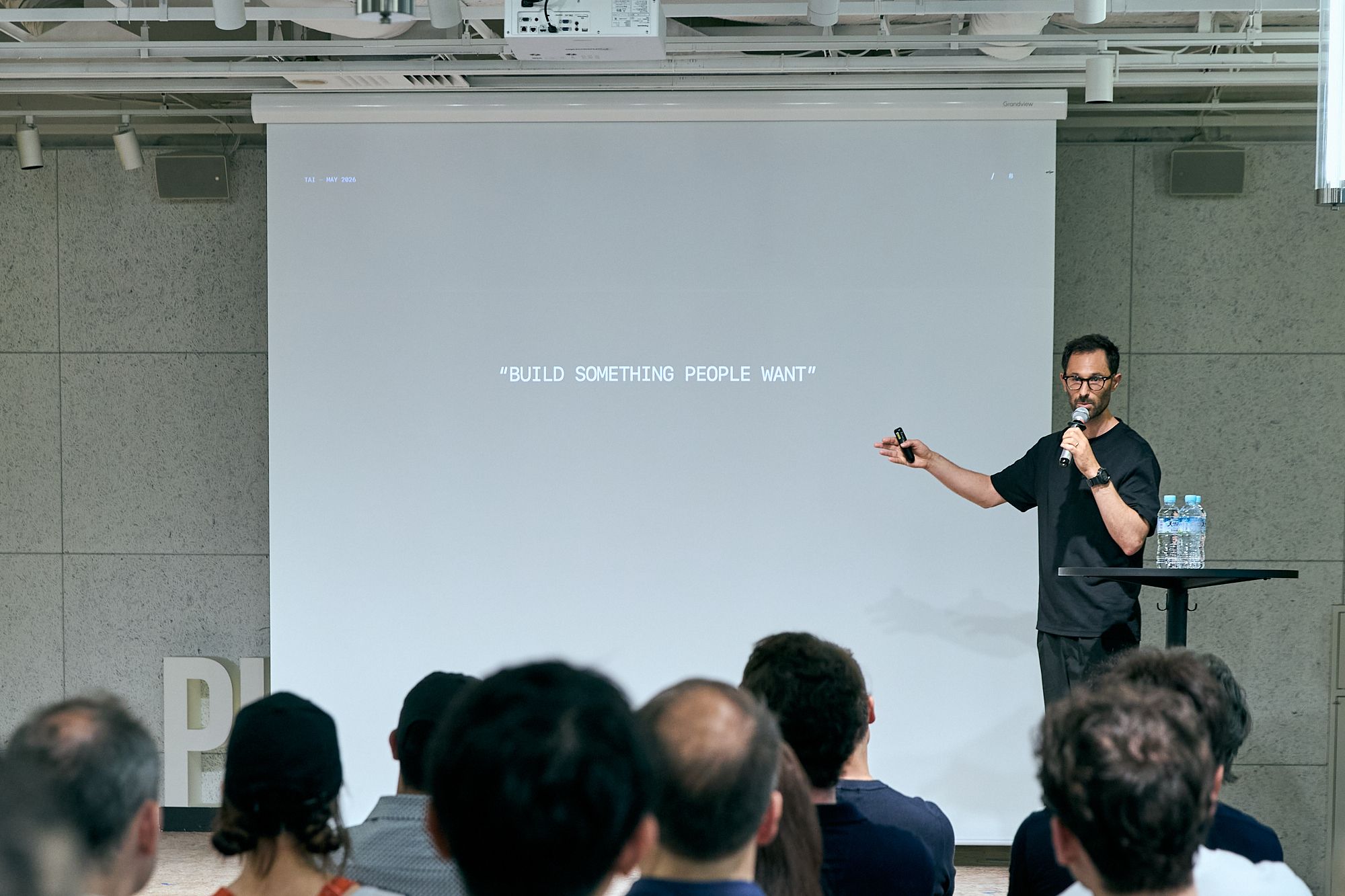
Fumito Kikuchi, Japan GTM Lead at Framer, focuses on control after generation: editing, collaboration, and the ability to improve existing pages. His talk makes the post-generation workflow a product question in its own right.
A page that looks convincing in a demo can create work if the responsible team cannot update it confidently. Changes need to fit the design system, work across screen sizes, and remain understandable to the people who maintain the site. The ability to generate an initial result does not establish those properties.
This suggests evaluating AI design tools through a second task as well as the first. After creating a page, ask the actual owner to change a product detail, replace an image, or adjust a layout. The ease and reliability of that revision can be more informative than the speed of the original generation.
Creative judgment and AI capability need to meet
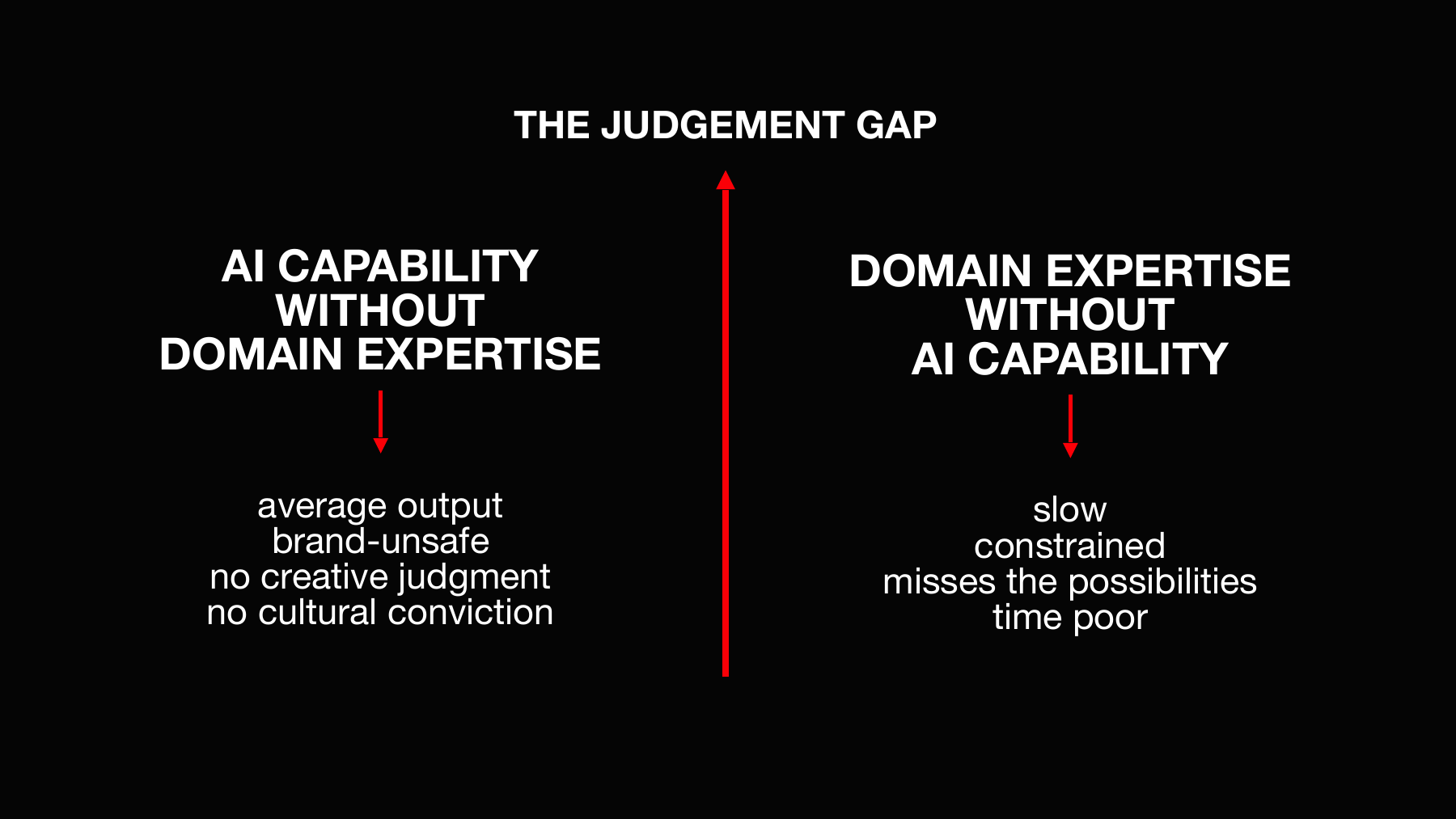
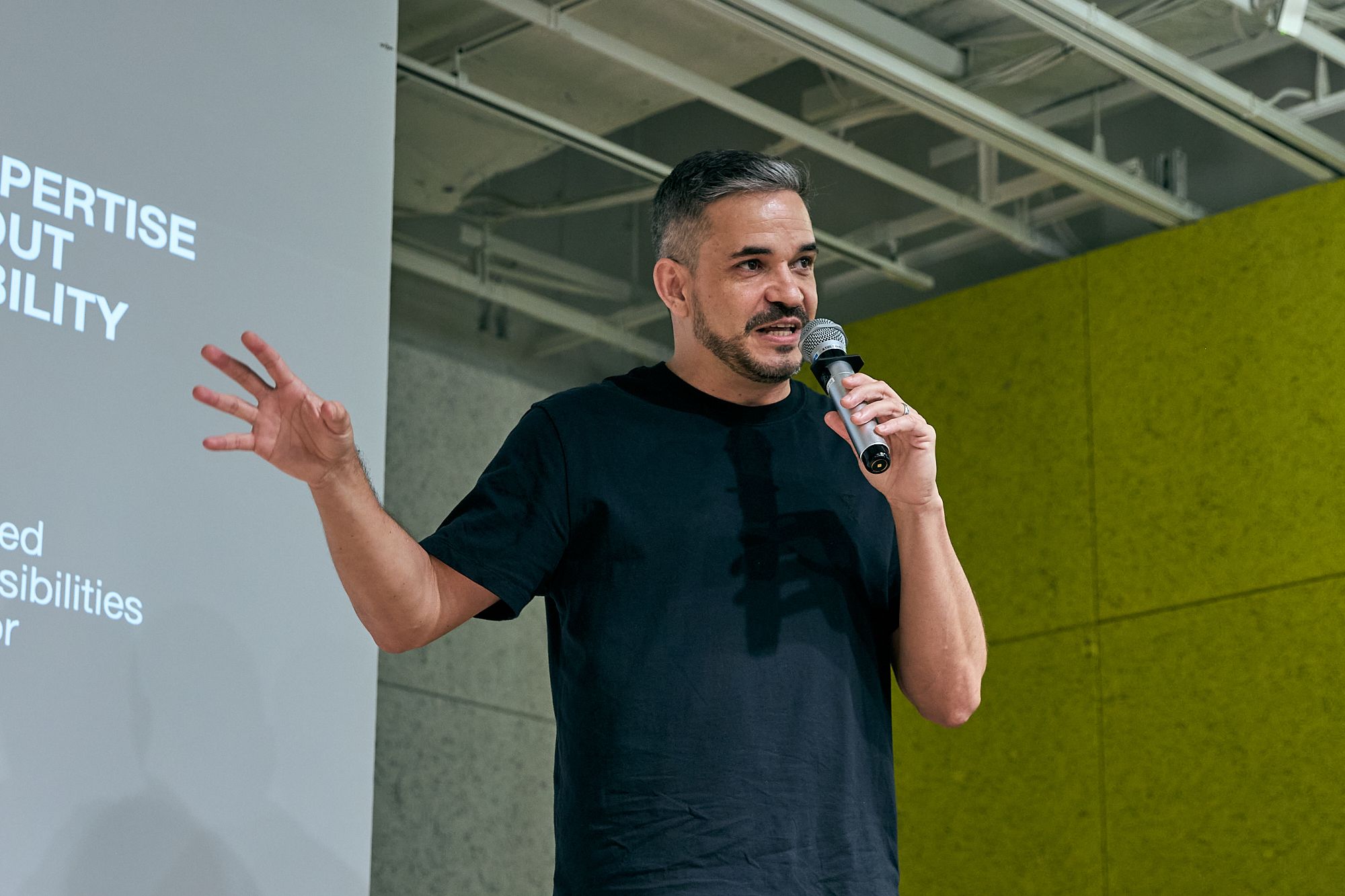
Anthony Baker, Managing Director of R/GA Japan, describes a judgment gap between domain expertise and hands-on AI capability. His examples of internal workflows include setting up design-system styles, checking consistency, supporting additional breakpoints, and identifying outdated documentation after a change.
These are concrete targets because they attach AI to recognizable friction in an existing practice. A consistency check can give a designer more time to evaluate the work itself. A tool that finds documentation affected by a change can reduce the chance that the next person works from an obsolete rule.
Baker’s process begins with a point of friction, builds a workflow around it, and iterates. The important implication is that the team develops judgment through making and reviewing actual work. Installing a tool does not, by itself, create that capability.
Foundry’s perspective: make a campaign update repeatable
Consider an illustrative team adapting a product campaign for English and Japanese audiences. A PoC might generate several attractive layouts. The business process also needs approved product facts, language-specific review, version control, and a clear route to publication.
We would begin by separating fixed inputs from creative choices. Product claims and approved terminology should come from controlled sources. Layout, emphasis, and wording can have more room for exploration, but each proposal should retain the brief and the reasons behind important choices.
An early workflow could produce drafts, check mechanical rules, and assemble a comparison for reviewers. A Japanese-language reviewer can examine meaning and tone; a brand owner can decide whether the work expresses the intended identity. Those judgments should be captured as actionable feedback, not reduced to a single undifferentiated approval score.
The next test is a real change. If a product specification is revised, can the team identify affected assets and regenerate or edit only what needs to change? Can it tell which language version still awaits review? These questions expose whether the workflow can support repeated work rather than a one-off demonstration.
For Foundry Labs’ creative AI and enterprise systems work, the opportunity is to connect generation to the inputs, review steps, and maintenance responsibilities already present in the business. The outcome is more valuable when the people accountable for the brand retain the ability to understand and shape it.
Sources and further reading
This article draws on the Applied AI in Brand Architecture programme and the talks identified above. Tokyo AI (TAI) connects researchers, engineers, and industry; explore Foundry Labs’ community work for more context.
Talk materials from Anthony Baker and Fumito Kikuchi are available upon request. Please use our contact form and include the event title and speaker name.
Speaker profiles
Raphael Hodé. Co-founder and CEO of nowthen, working in brand and design. LinkedIn.
Fumito Kikuchi. Japan GTM Lead at Framer, with a background in solution architecture. LinkedIn.
Anthony Baker. Managing Director of R/GA Japan, working at the intersection of creative work and technology. LinkedIn.
All articles