
Foundry Labs / From the community
Operational AI Governance: Give Policy an Owner and a Decision Path
In this article
An AI policy is only useful when someone can apply it to a real request. Tokyo AI's Operationalizing AI Governance event explored what changes when AI tools enter daily work: information access becomes harder to describe, data ownership crosses team boundaries and a policy written once may lag behind the systems it is meant to govern.
Give the policy a decision path
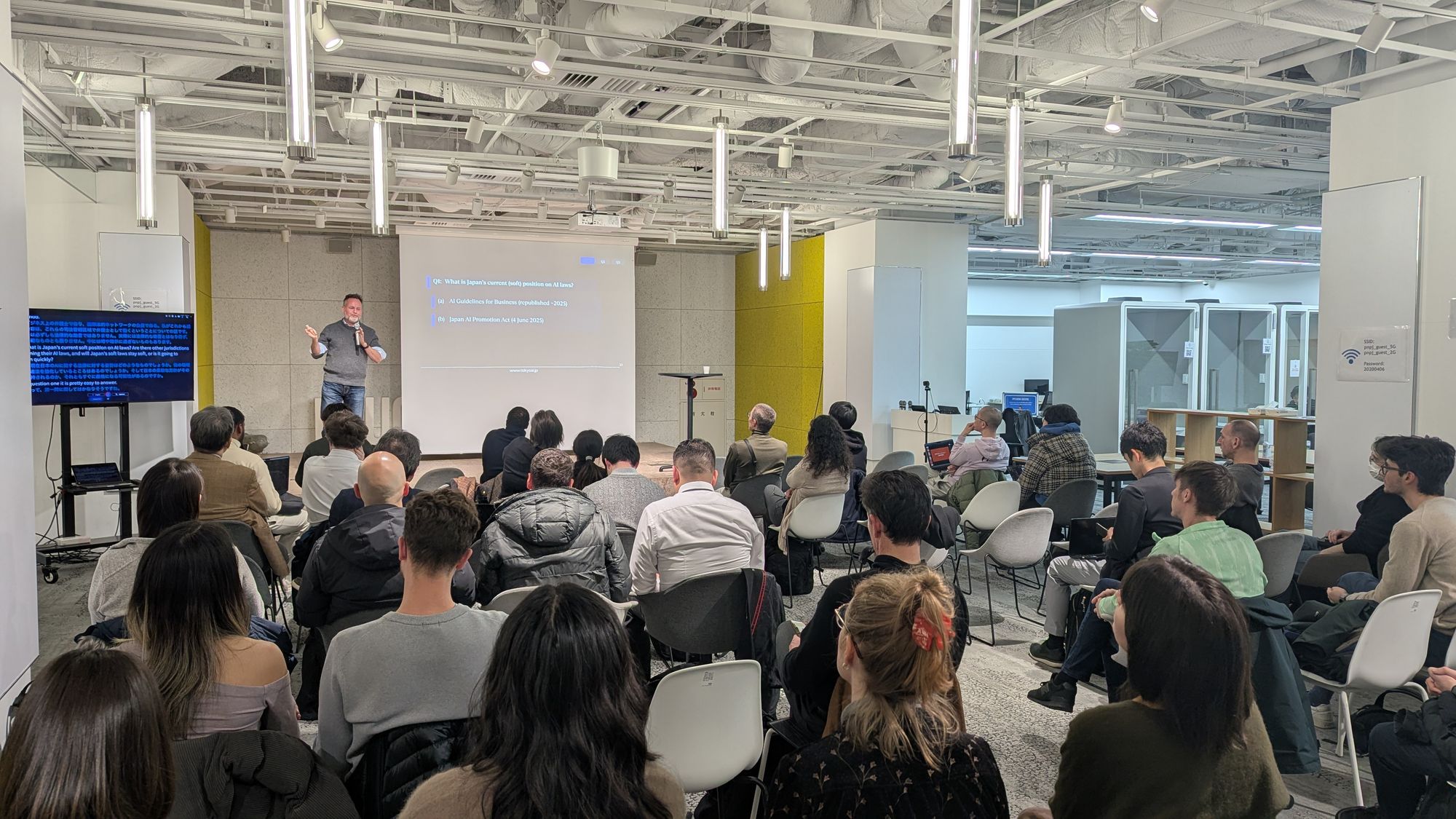
Alex Sayle's talk focused on building AI policy in practice. His talk showed a sequence of observing the current environment, writing policy, defining scope and connecting resources to continuing tests. The operational insight is that a policy needs both an owner and a way to decide. If a team wants an assistant to read customer records, the question is not merely whether “AI use” is permitted. It is which records, for which task, under whose authority and with what evidence of access.
Controls should be revisited when a tool, data source or purpose changes. An integration added after the original review can give an assistant access to information the policy owner never considered. Conversely, a rule so broad that it blocks every useful workflow may simply drive work into untracked channels. A review path should let teams propose a use, document its boundaries and revise the decision as facts change.
Connect controls to live operations
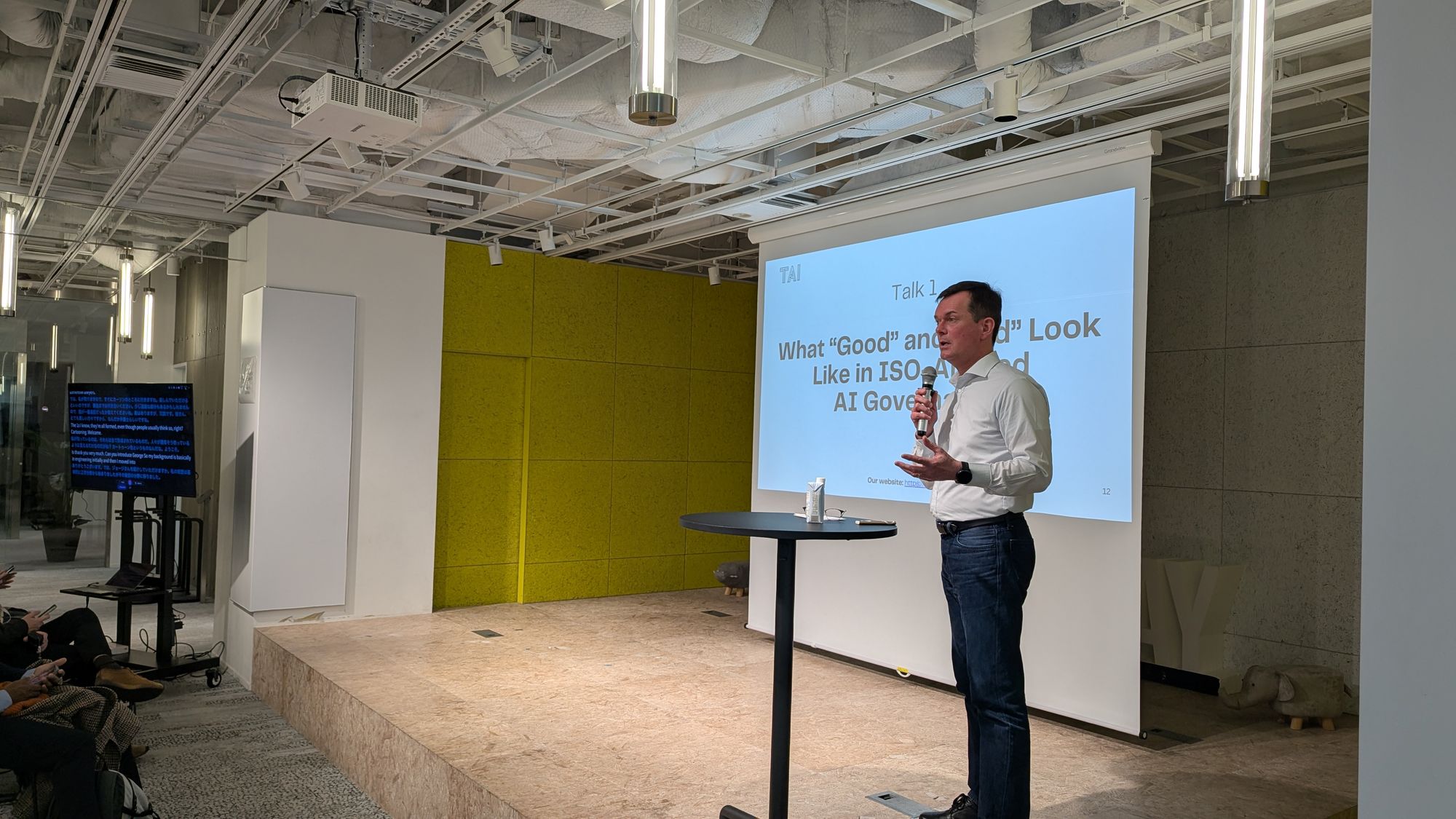
Consider a support assistant that drafts answers from internal knowledge and customer history. In a pilot, a reviewer can inspect every answer. At scale, the organization needs to know which source material the assistant can retrieve, whether sensitive records are excluded, who approves new sources and how a wrong disclosure is investigated. Continuous tests can check selected controls, but they do not replace a named person who interprets exceptions.
The resulting governance record is more useful than a static statement of principle. It links the use case, approved access, responsible team, test evidence and date for review. That gives product and security teams a common basis for deciding when to expand, pause or redesign an AI workflow. The article is an operational design discussion, not a claim of certification or legal compliance.
Tokyo AI is a community of builders, researchers and business leaders in Japan, run by Foundry Labs. See the event page.
Materials from the speakers’ talks are available upon request. Please use our contact form and include the event title and speaker name.
Speakers
- Alex Sayle, Head of Security, Fujitsu Launchpad.