
Foundry Labs / From the community
Reliable AI Agents: Separate Memory from Execution State
In this article
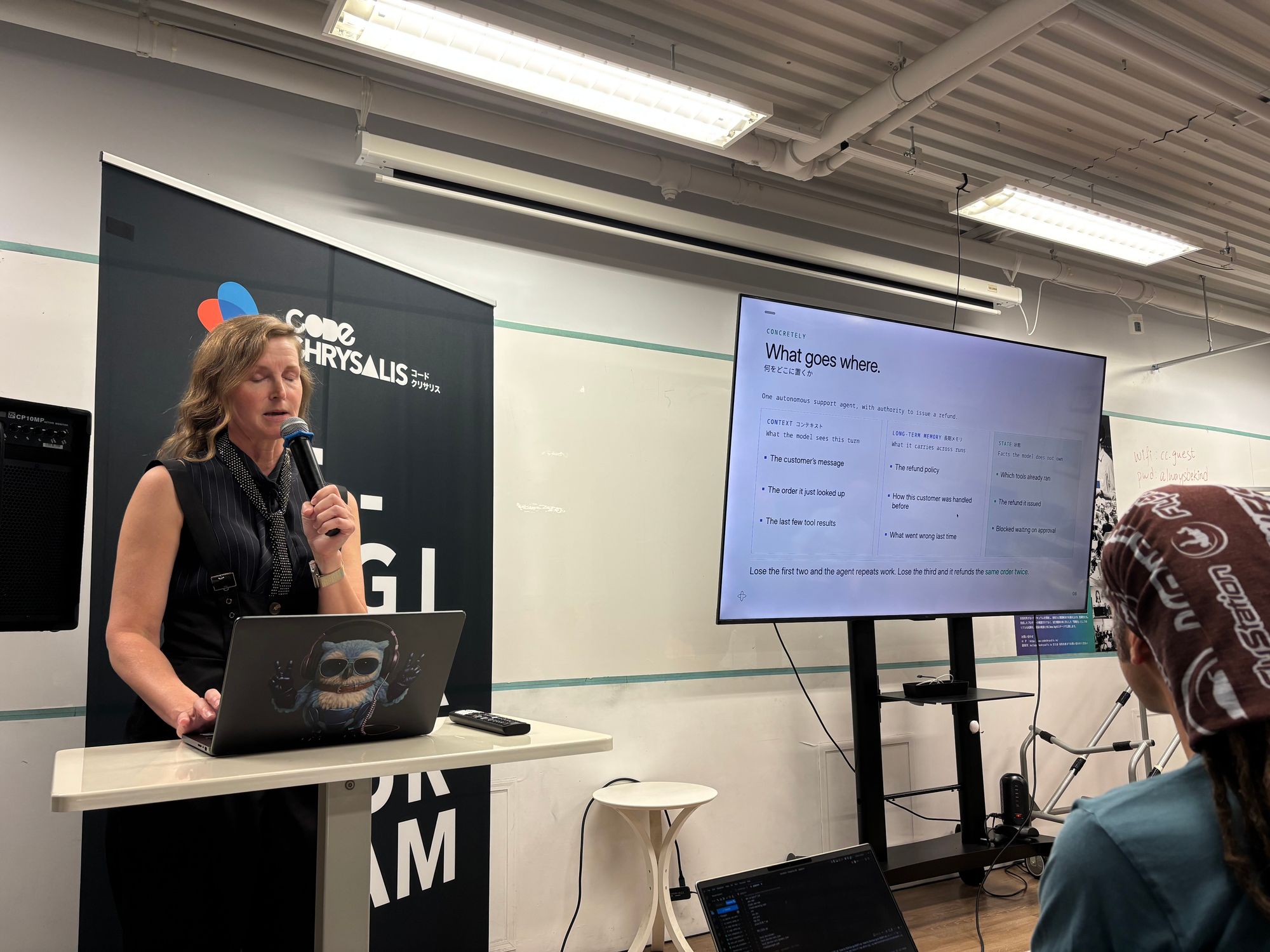
An agent can recall a customer preference and still lose an unfinished task. At Tokyo AI's October 2026 session on reliable agents, the talks separated three concerns that are often compressed into the word “memory”: information useful for reasoning, durable records of what work has happened, and context that several agents can share.
Remember facts without confusing them with state
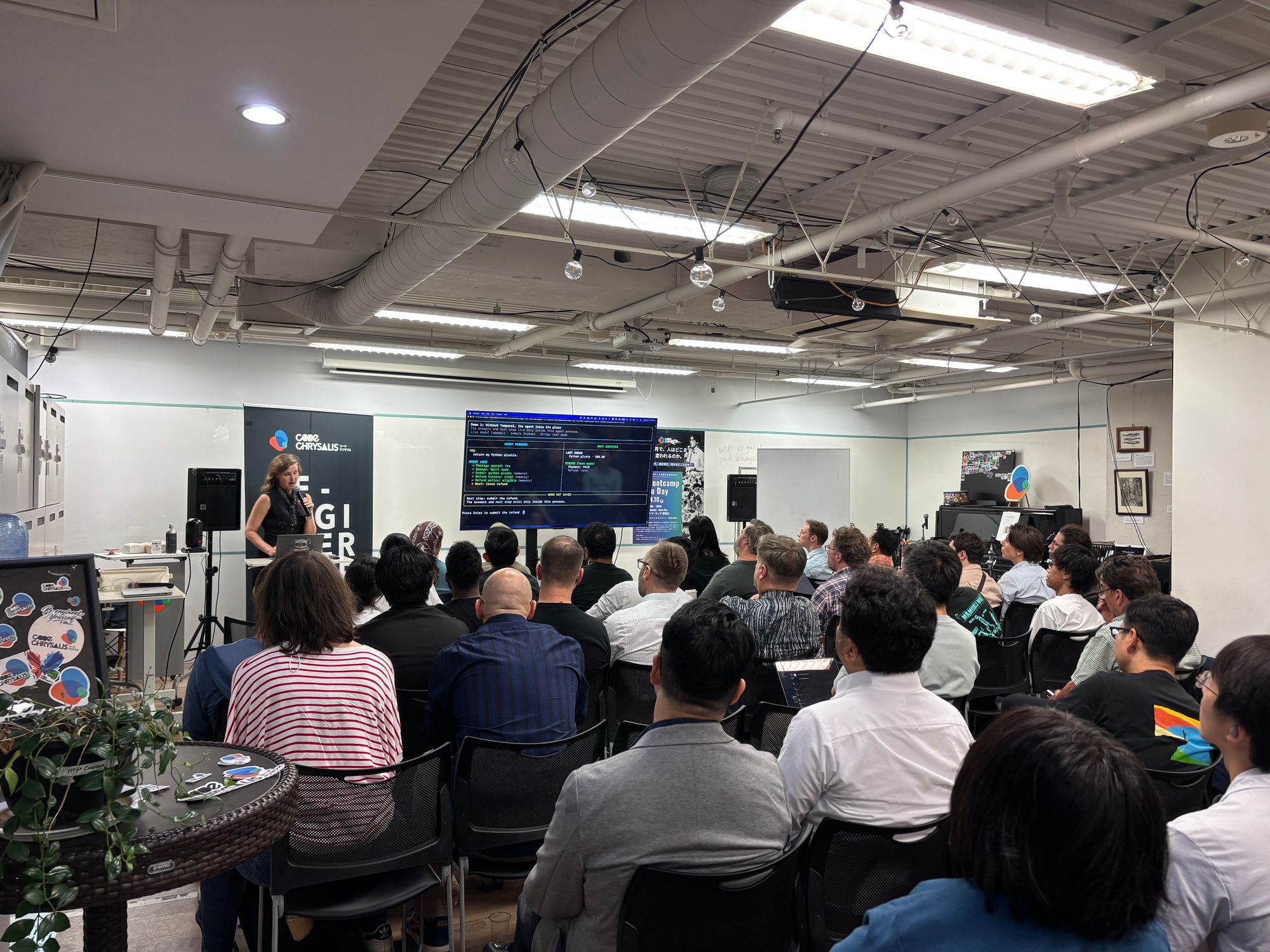
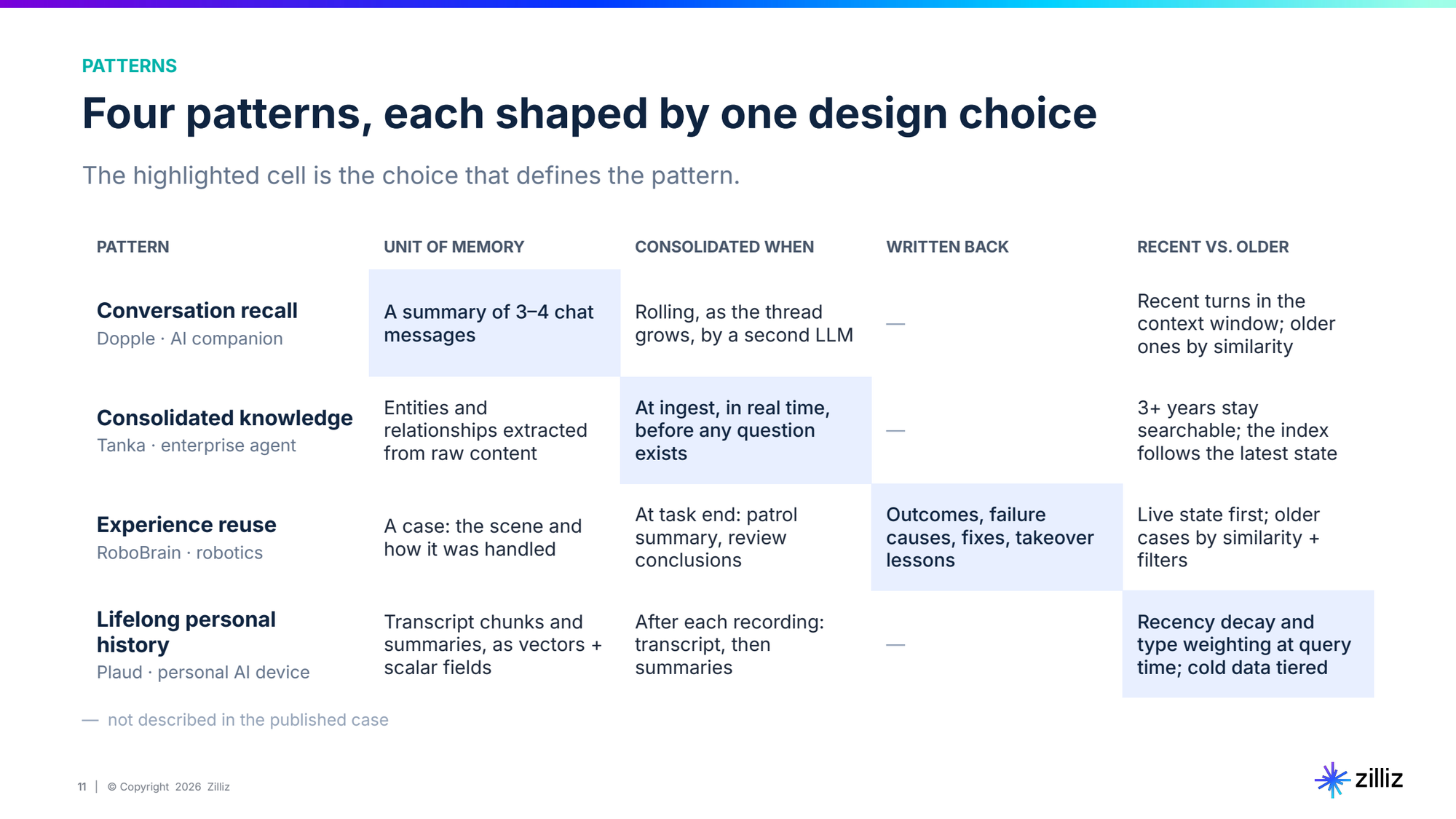
Yulan Yan showed that “memory” means different things in different products. A companion may need to retrieve a past conversation. An enterprise agent may need to combine interactions scattered across work systems. A robotics application may need to recognize a situation resembling a previous case. These are retrieval questions, each with different freshness, access and relevance requirements. Saving every message is not the same as making the right information available at the right point.
Melanie Warrick's execution-state perspective addresses another failure mode. A workflow must know which step completed, which external action is pending and what to do after an interruption. If an agent restarts after sending a request but before receiving confirmation, recalling the original instruction does not tell it whether to repeat the action. It needs a durable record and a way to check the external system. Recovery is part of the business process, not merely a prompt design problem.
Share context with boundaries
Koji Annoura explored persistent context across agents using a knowledge graph. Shared context can help separate agents work from the same entities and relationships, but it also creates a governance question: who may update a fact, which version is authoritative and what happens when two sources disagree? A graph is useful when relationships matter; it does not remove the need to record provenance and permissions.
Consider an illustrative procurement assistant. It remembers a supplier's preferred document format, records that an invoice was checked, and shares the supplier relationship with a separate compliance agent. The first item is retrievable context; the second is execution state; the third is shared organizational knowledge. They need different retention, access and correction rules. A production review should test each layer separately, including interrupted work and contradictory records.
Reliable agents need all three capabilities, but the architecture becomes clearer once the team stops calling every persistent thing “memory.”
Tokyo AI is a community of builders, researchers and business leaders in Japan, run by Foundry Labs. See the event page.
Materials from the speakers’ talks are available upon request. Please use our contact form and include the event title and speaker name.
Speakers
- Melanie Warrick, AI & DevRel Engineer, Temporal.
- Yulan Yan, Solutions Architect, Zilliz.
- Koji Annoura, independent consultant and co-founder of Neo4j Users Group Tokyo.